



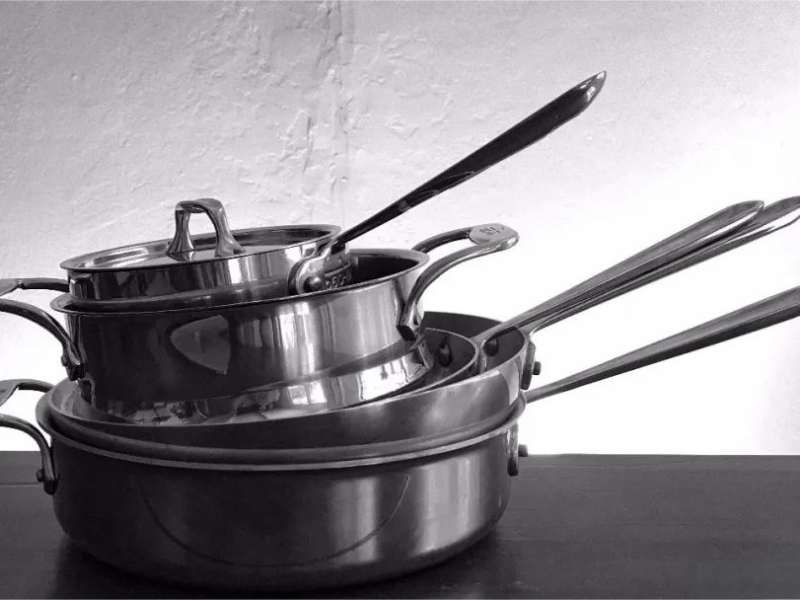
The thickness of the pot not only affects its weight and feel, but is also directly related to the uniformity of heating of the ingredients, the control of the firepower, and the efficiency of energy utilization. Hengguang will systematically analyze how the cookware thickness affects heat preservation and cooking effect from the perspective of thermodynamic principles and practicality.
Thickness and thermal performance
The cookware thickness is essentially a balance between heat capacity (heat storage capacity) and heat conduction speed. Cookware of different thicknesses has its own characteristics:
- Thin pot (1.5-2.0mm)
It heats quickly and is suitable for operations that require quick response, such as stir-frying and frying eggs. However, it has poor heat preservation and large temperature fluctuations, which can easily cause local overheating, such as burnt bottom of the pot and undercooked edges.
- Medium-thick pot (2.5-3.0mm)
It strikes a balance between heat conduction speed and heat preservation, which can effectively avoid the “hot spot” problem and is suitable for daily home cooking, shallow frying and other cooking.
- Thick pot (3.5mm or more)
It heats up slowly, but has large heat capacity and stable heat storage, which is very suitable for stewing and braising dishes. For example, a 5mm thick cast iron pot can maintain a slight boiling state for a long time, reduce water evaporation, and improve cooking efficiency.
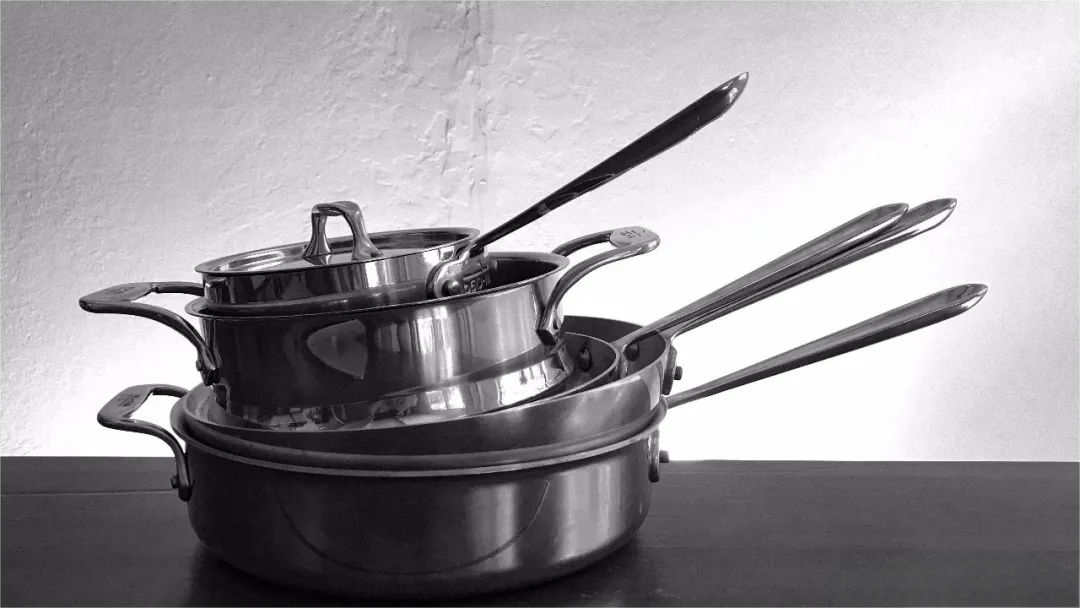
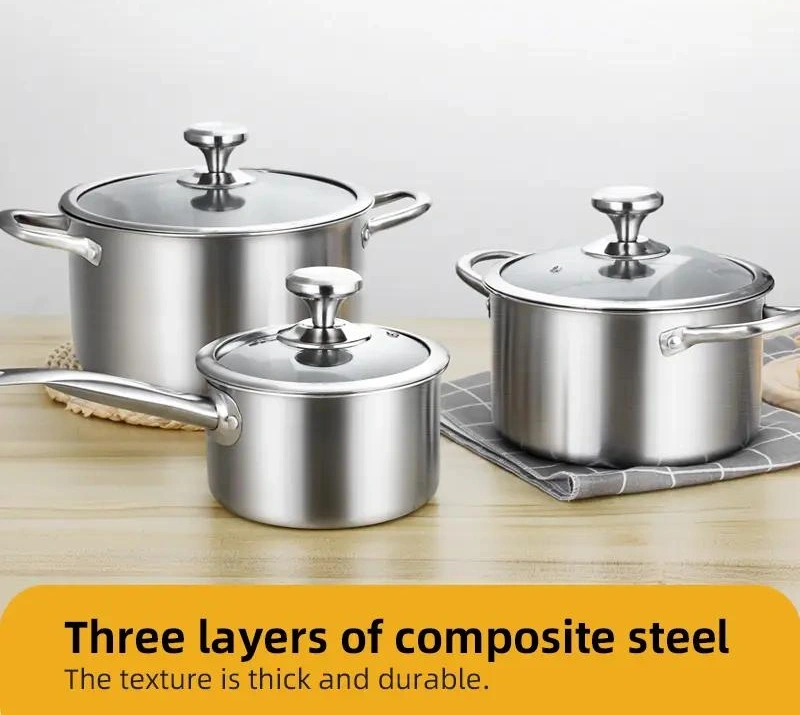
Principle explanation: The heat preservation of thick pots comes from the principle of thermal inertia, that is, the thick metal layer is like a “thermal battery”, which absorbs a lot of heat energy and releases it slowly, so it can continue to stew and fry even after turning off the fire.
How to choose the right cookware thickness?
1. The “golden thickness” of different materials
The thermal conductivity of different materials varies, which determines their suitable thickness range:
| Material | Recommended thickness | Reason explanation |
| Wrought iron pan (Chinese wok) | 1.2–2.0mm | Too thick is too heavy and affects flipping |
| Cast iron pan (including enamel) | 3–5mm | Strong heat preservation, insufficient thickness requires frequent reheating |
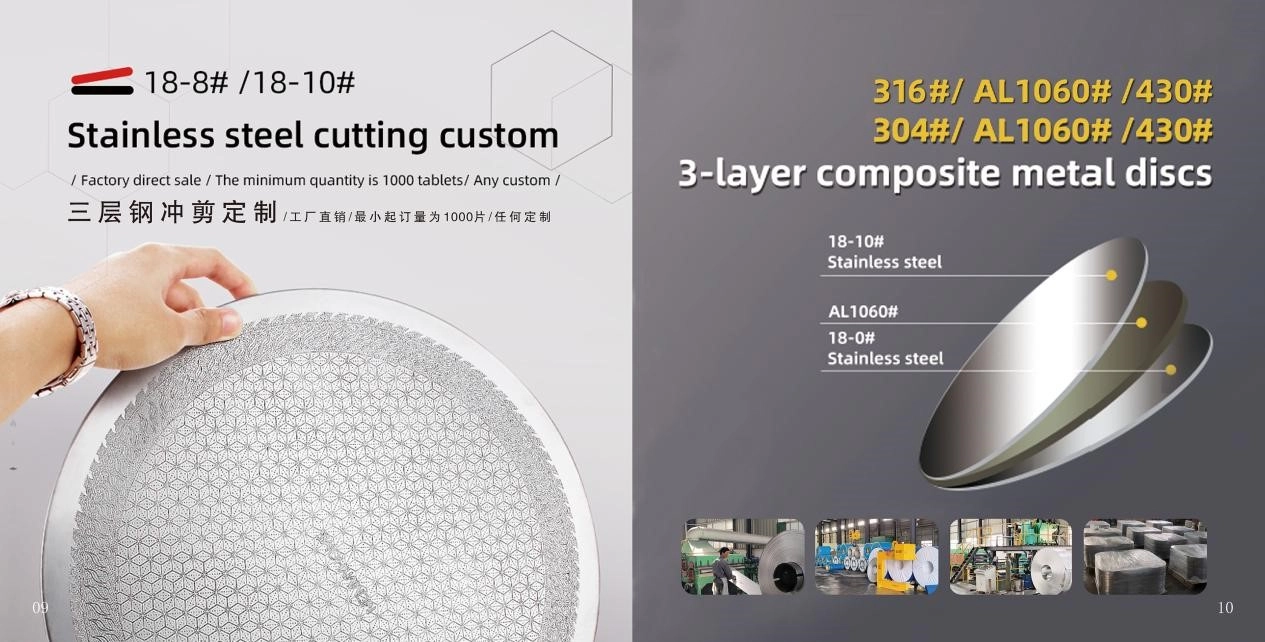
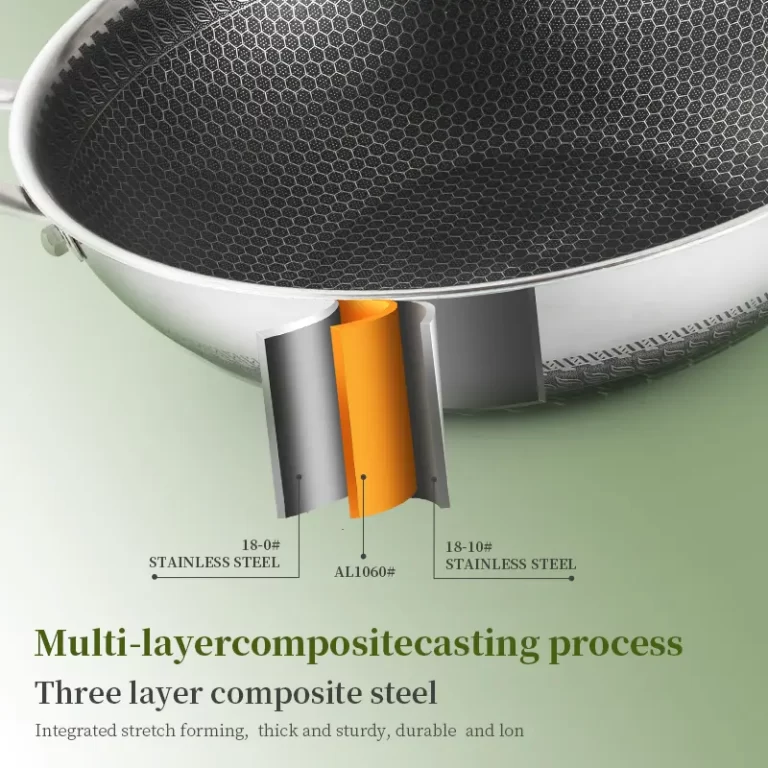
| Stainless steel pan (composite bottom) | 3–5mm | Poor thermal conductivity, requires aluminum/copper layer to supplement thermal conductivity |
| Aluminum pan/copper pan | 1.5–3.0mm | Excellent thermal conductivity, can be made very thin, but deformation must be prevented |
Choose thickness according to cooking method
| Cooking method | Recommended thickness | Principle |
| Stir-frying, quick frying | 1.2–1.6mm | Rapid heating, conducive to fire control and flipping |
| Daily cooking | 2.0–3.0mm | Heat evenly, suitable for a variety of ingredients |
| Stew, braise | ≥3.5mm | Long-term constant temperature, lock in flavor |
| Fry steak, pancakes | 4.0–5.0mm | Uniform high temperature, forming a perfect charred layer |
Common misunderstandings about cookware thickness
The thicker the pot, the less likely it is to stick to the pot?
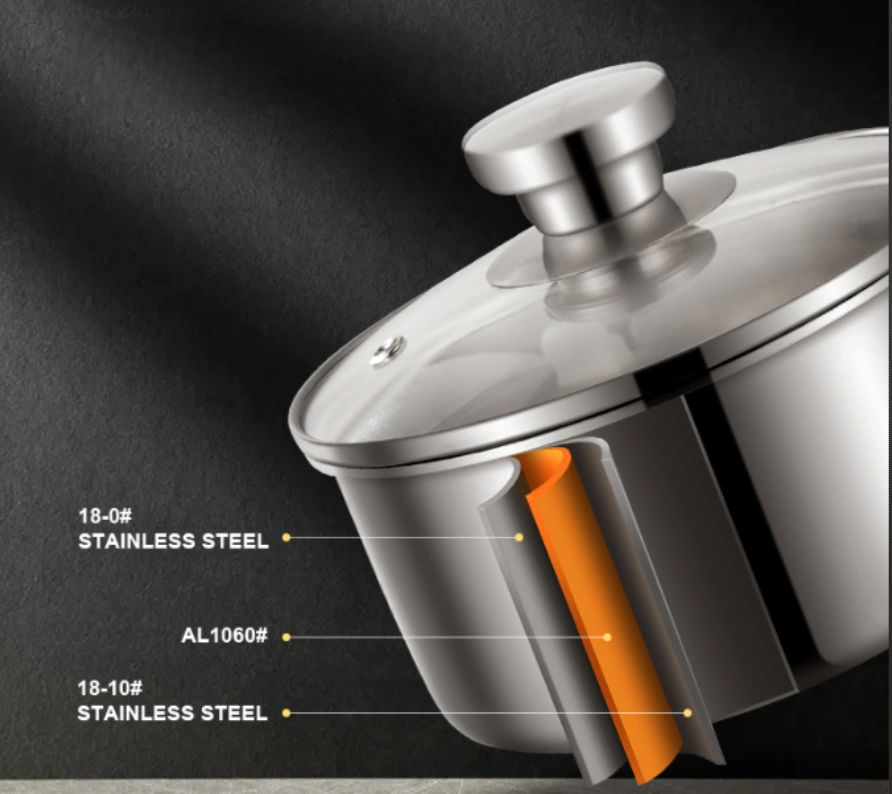
Although a too-thick pot reduces hot spots, it heats up slowly, which can easily cause insufficient initial oil temperature, making it easier to stick to the pot. More important than thickness is the uniformity of thermal conductivity of the material. For example, the temperature control of a 3mm composite bottom stainless steel pot is far better than that of a 5mm single-layer iron pot.
Do thick pots consume more gas?
Although thick pots preheat slowly, they have good heat preservation and can be maintained at a low heat later, making cooking longer and more energy-efficient.
Are thin pots cheap and low-end?
In fact, many professional Chinese chefs prefer 1.5mm wrought iron pans because they heat up quickly and have flexible fire control, which perfectly matches the rhythm of “fast stir-frying” in Chinese cuisine.
How to make thin cookware “intelligently store heat”
The progress of materials and design technology has gradually solved the shortcomings of traditional thin pans:
Microporous composite coating
Spraying porous ceramic coating on the surface of the pot body to form an “air insulation layer” greatly reduces heat loss and inhibits the generation of oil smoke.
Special-shaped structure design
The pan bottom is partially thickened (such as 4mm in the center of the frying pan) and the edge is thinned (1.5mm) to achieve both heat storage and lightweight.
Sandwich guide groove technology
The guide design is added to the multi-layer pot bottom to diffuse heat energy horizontally and improve the heating efficiency of the edge area.
How to choose practical cookware
Clear cooking preferences
Fast stir-fry/frying: Choose 1.2-2.0mm wrought iron pot (fast heating and light)
Slow stew/braising: Choose ≥4mm cast iron pot (locks temperature and is stable)
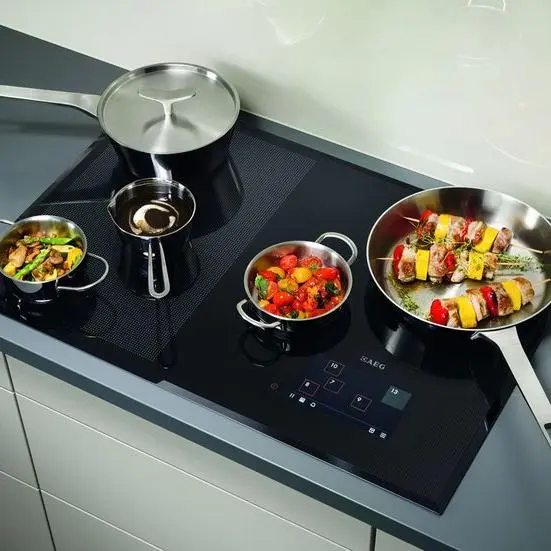
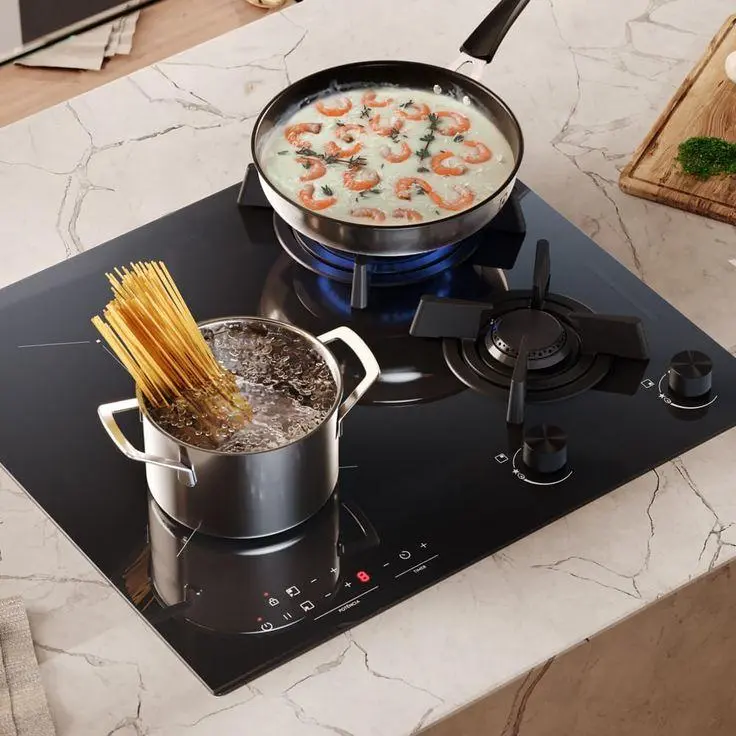
Comprehensive daily use: Choose 2.5-3.0mm composite bottom stainless steel pot (suitable for various stoves)
On-site hands-on test
Lift the pot with one hand for 10 seconds without feeling heavy
Pouring water test: Water can gather in the center of the pot
Clear knocking sound, no muffled sound, indicating no cracks
Daily maintenance suggestions
Avoid empty cooking of thin pots to prevent deformation of the pot body
Dry and oil cast iron pots after use to prevent rust
Avoid “sudden heating and cooling” of ceramic/glass pots to prevent cracking
Conclusion
Whether cookware is easy to use does not depend on how “thick” it is, but on whether it fits your cooking rhythm. Understanding the thermodynamic logic behind the cookware thickness can help you make rational choices among a wide range of products and say goodbye to the misunderstanding that “thick is better”. In the dance between fire and metal, let the ingredients shine with their original flavor, this is the true romance of the kitchen. Contact Hengguang to get your cookware solution.