



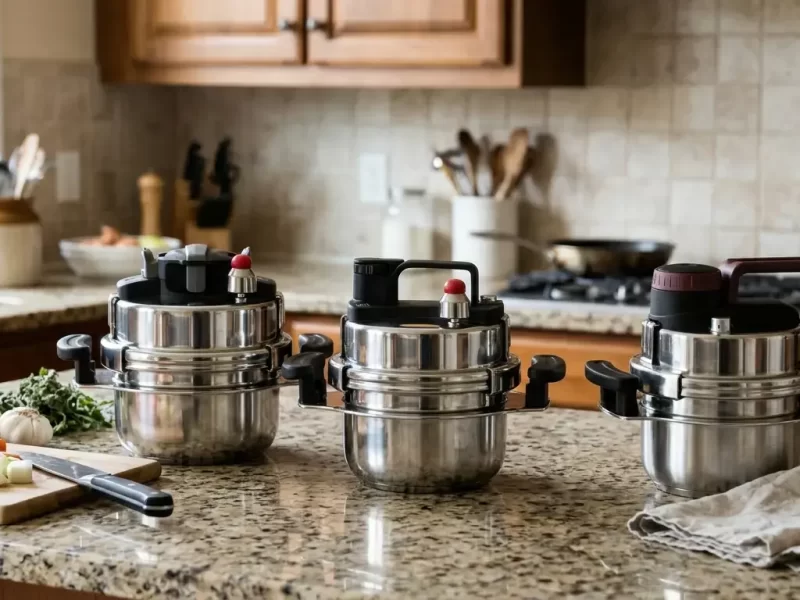
Building a competitive mini pressure cooker product line requires more than offering several capacities or designs. Importers, wholesalers, retailers, and private-label brands need a balanced SKU assortment that covers different customer needs without creating unnecessary inventory and management costs.
The key is to establish a clear role for each product, differentiate models through meaningful features, and expand the range based on demand. A well-planned linha de produtos de mini-panelas de pressão gives buyers more flexibility while keeping sourcing, inventory, and product development manageable.
What Should a Competitive Mini Pressure Cooker Product Line Include?
Start with a Core SKU
A core SKU is the main product around which the rest of the product line is built. It should meet the needs of the brand’s primary customer group while offering a practical balance of functionality, price, and usability.
Rather than selecting the largest or most feature-rich model, buyers should identify the configuration most aligned with their intended positioning.
Add Complementary SKUs
Additional models should serve distinct purposes. They may differ in capacity, construction, appearance, or included accessories.
The objective is not to maximize the number of products. Each new SKU should address a demand that the core model does not fully cover.
How to Build a Mini Pressure Cooker SKU Structure
Use Capacity as the First Product Layer
Capacity is a practical starting point for structuring a mini pressure cooker product range. Hengguang’s published range includes capacities from 0.8L to 4.0L, providing options for different product configurations.
Buyers can organize potential SKUs into three broad groups:
- Smaller-capacity models: For customers prioritizing compact dimensions and smaller cooking volumes.
- Core-capacity models: For broader everyday use and a balanced product proposition.
- Larger-capacity models: For customers who need more cooking volume while remaining within the mini pressure cooker category.
These are planning categories, not fixed capacity definitions. The actual selection should reflect the intended customers and available product specifications.
Use Product Configuration as the Second Layer
Capacity alone may not create enough differentiation. Buyers can also consider meaningful differences in:
- Material and interior: For example, stainless steel or nonstick configurations.
- Structure: Different handle designs, lid configurations, or base construction.
- Appearance: Surface finishes and design details.
- Accessories and packaging: Different included components or retail packaging options.
Each variation should serve a clear product or commercial purpose. Changing a logo or color alone may be sufficient for some branding strategies, but it does not necessarily justify maintaining a separate SKU if the products otherwise serve identical needs.
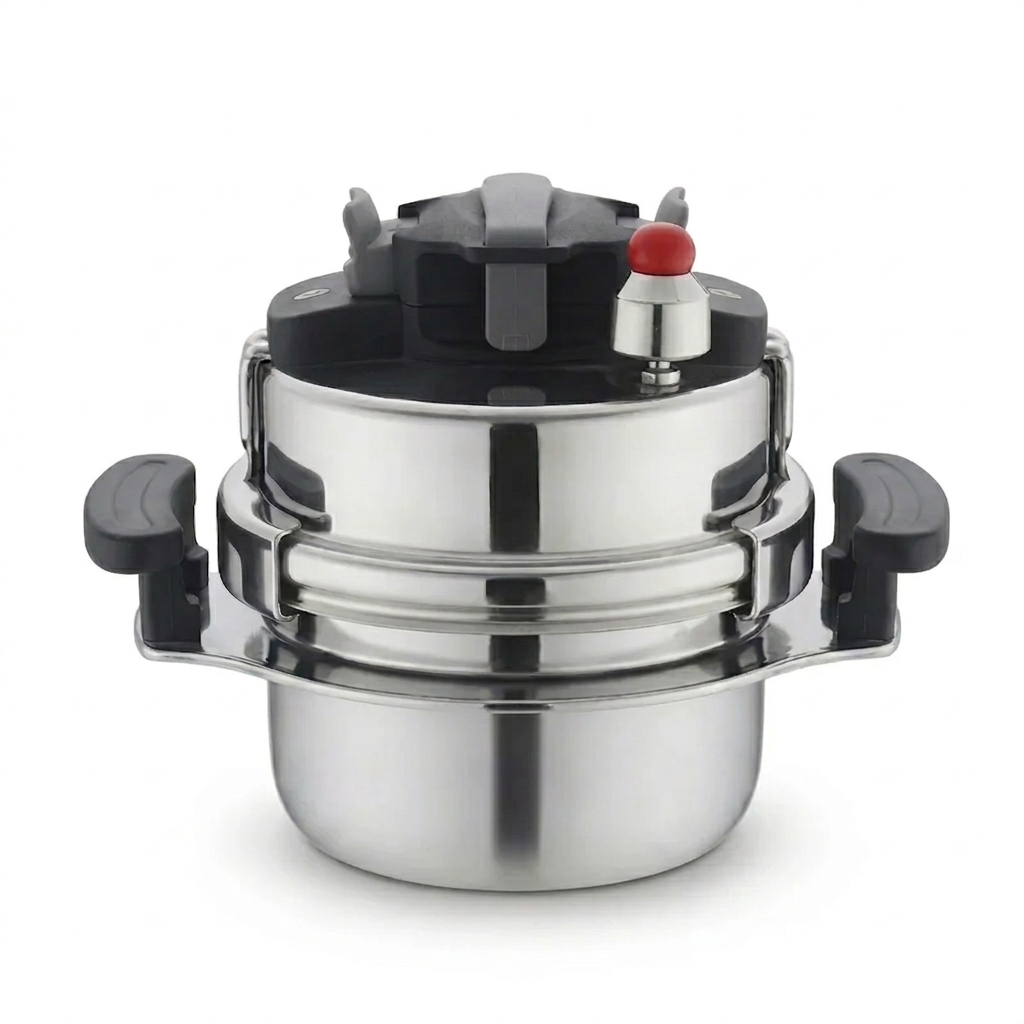
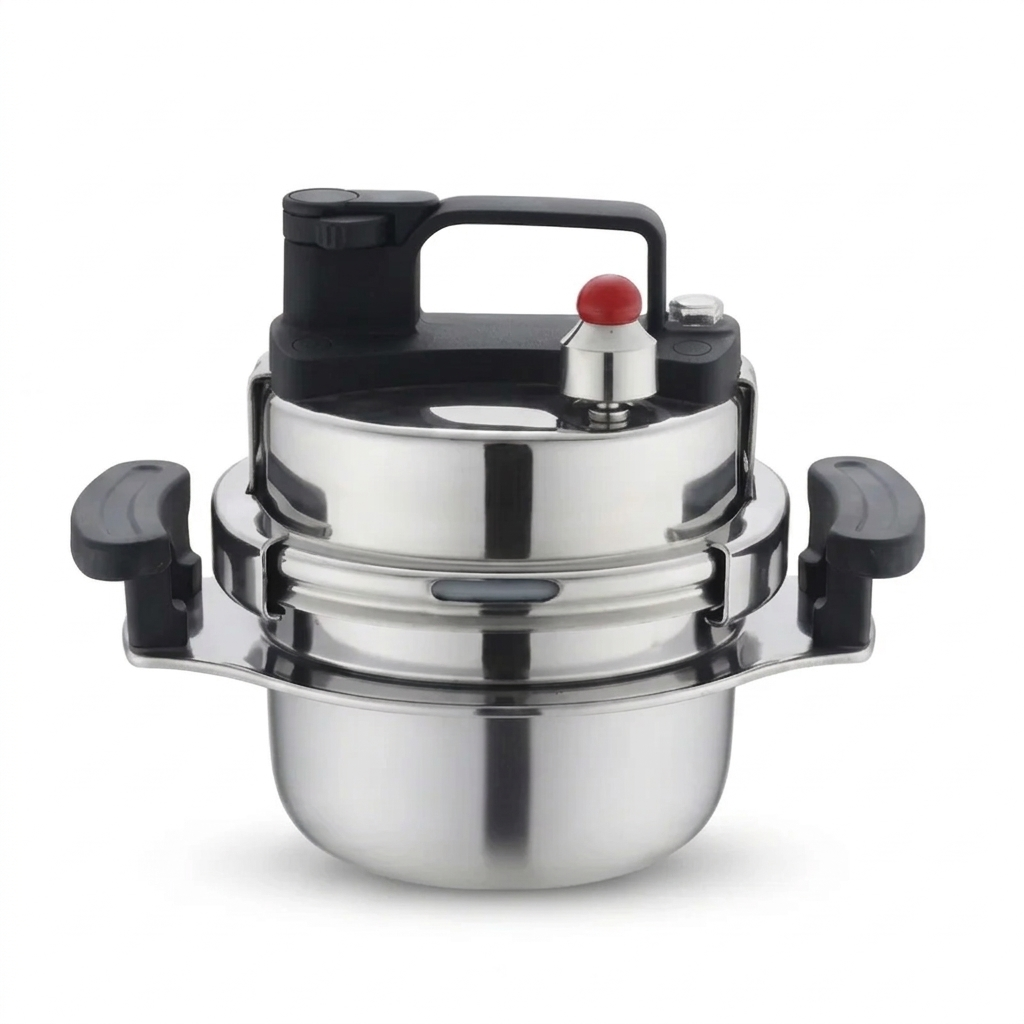
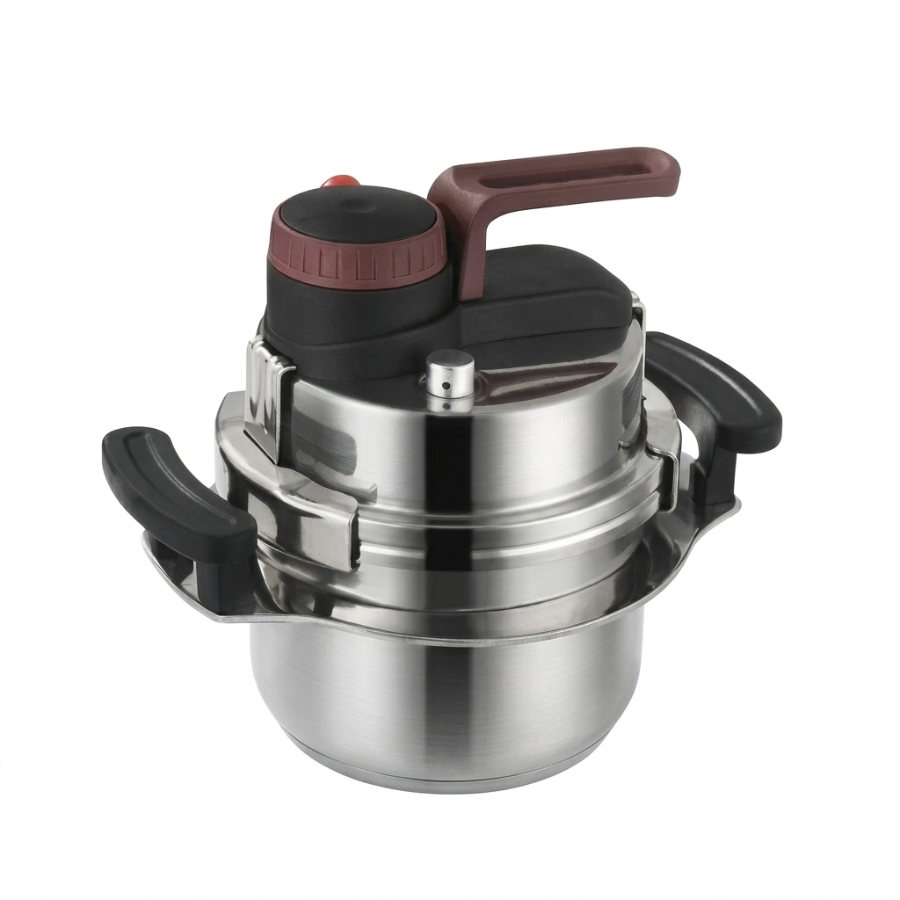
Give Every SKU a Clear Role
A product matrix helps buyers assign each model a defined position.
| SKU Role | Example Configuration | Purpose |
|---|---|---|
| Core SKU | Main capacity with practical standard features | Serves the primary customer group |
| Entry SKU | Smaller capacity with essential features | Supports an entry-level price position |
| Premium SKU | Enhanced finish or differentiated configuration | Supports a higher-value proposition |
| Specialized SKU | Specific capacity or feature combination | Serves a clearly identified niche |
How to Differentiate SKUs Without Creating Unnecessary Complexity
Focus on Meaningful Product Attributes
Effective differentiation gives customers a reason to choose one model over another.
Capacity can distinguish cooking volume, while material, base construction, handles, and surface finishes can differentiate functionality or appearance. Packaging and accessories may also help brands tailor products to particular retail channels.
However, every difference has potential costs. Additional configurations may require separate inventory, product photography, packaging materials, sample approvals, or production arrangements.
Avoid SKUs That Compete with Each Other
Two products may be too similar if they target the same customers, occupy the same price range, and provide nearly identical functionality.
Before adding a new model, buyers should ask:
- Does it address a different customer need?
- Does it provide a meaningful functional or visual distinction?
- Can the difference justify its additional inventory and management costs?
- Is there evidence of demand for this configuration?
If these questions cannot be answered clearly, refining an existing SKU may be more effective than expanding the assortment.
How to Cover Different Price Tiers with a Mini Pressure Cooker Product Line
A competitive product line can use three broad positioning levels.
| Price Tier | Product Strategy | Main Consideration |
|---|---|---|
| Nível de entrada | Essential functions and practical construction | Control unnecessary costs |
| Core range | Balanced functionality, appearance, and price | Appeal to the primary customer group |
| Premium range | Enhanced materials, finish, design, or accessories | Provide a clear reason for the higher price |
Price positioning should not depend on capacity alone. Material grade, product structure, surface treatment, included accessories, and packaging can all affect manufacturing cost and perceived value.
For example, two mini pressure cookers with the same capacity may serve different price tiers if one has a more refined finish or a differentiated configuration. However, the added features should justify the price difference from the customer’s perspective.
Before finalizing the range, buyers should compare estimated production costs, target retail prices, channel margins, and competing products. Without this analysis, a product labeled “premium” may not deliver a commercially viable margin.
How to Decide Which SKUs to Launch First
Start with a Focused Assortment
New brands generally benefit from starting with a manageable selection rather than introducing every available capacity and configuration at once.
A practical launch process is to:
- Define the primary customer group and product positioning.
- Select one core SKU.
- Add only the models needed to cover distinct customer needs or price tiers.
- Confirm the MOQ, production cost, and inventory commitment for each model.
- Expand after collecting meaningful sales and customer feedback.
This approach reduces the risk of committing too much capital to products whose demand has not yet been established.
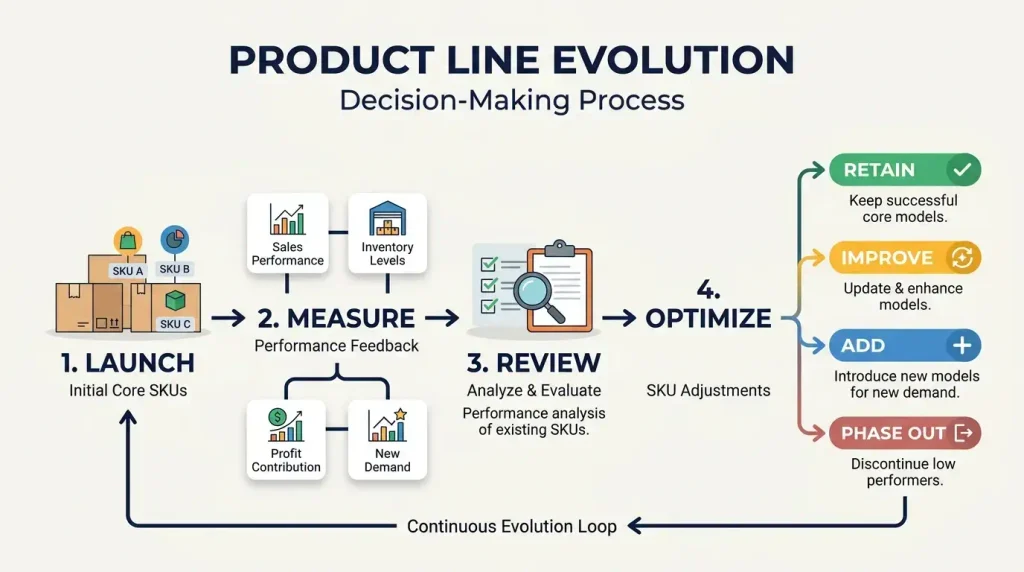
Use Sales and Inventory Data to Expand
Once the products are selling, review performance at the individual SKU level.
Useful indicators include:
- Sales volume and sales velocity
- Gross margin contribution
- Inventory turnover
- Stockouts and replenishment frequency
- Customer feedback and returns
- Repeat orders and customer inquiries
A high-selling SKU may deserve more inventory, while repeated requests for an unavailable feature may justify developing another model. However, sales volume should not be considered in isolation: a product with lower sales may still contribute useful margins or serve an important customer segment.
Review Underperforming SKUs
Low sales do not automatically mean a product should be discontinued. Buyers should first determine whether the issue comes from pricing, positioning, product features, marketing, or insufficient availability.
If two SKUs consistently overlap and neither has a clear independent role, consolidating them may simplify inventory and purchasing.
This process, known as SKU rationalization, helps maintain a product line that remains commercially relevant without becoming unnecessarily complicated.
How to Develop a Mini Pressure Cooker Product Line with a Manufacturer
A manufacturer can help turn a product-line plan into a set of feasible, clearly specified products.
Start by reviewing existing models and identifying which ones can serve as the core SKU. Then determine whether additional products can be developed through changes to capacity, material, base construction, handles, lids, surface finishes, logos, or packaging.
Trabalhar com um mini pressure cooker manufacturer can also help buyers understand which variations use existing product designs and which may require additional development. This distinction matters because customization can affect tooling, sampling, MOQ, production costs, and lead times.
For private-label brands, OEM/ODM development can support differentiation while keeping the product range aligned with the brand’s positioning. Before committing to bulk production, confirm each SKU’s specifications, sample approval, quality requirements, and packaging details.
The objective is to develop a range that is not only attractive on paper but also practical to manufacture, purchase, replenish, and manage over time.

Mini Pressure Cooker Product Line Planning Checklist
| Planning Area | Key Question |
|---|---|
| Target customers | Which customer needs will the range serve? |
| Core SKU | Which model best represents the main product proposition? |
| Capacity range | Which capacities address distinct requirements? |
| Differentiation | Does each SKU offer a meaningful distinction? |
| Price positioning | Is there a clear reason for each price tier? |
| Sales channel | Do different channels require different configurations? |
| Inventory | Is the initial stock commitment manageable? |
| Personalização | Which variations require OEM/ODM development? |
| Performance review | What data will guide future expansion or consolidation? |
Conclusão
A competitive mini pressure cooker product line is built around clear SKU roles, meaningful product differentiation, and manageable inventory commitments. Start with a core model, add complementary products where demand justifies them, and use sales and inventory data to guide future expansion.
By combining a structured assortment plan with a capable manufacturer’s existing models and customization options, brands can develop a product range that is commercially practical and easier to scale.
FAQs About Mini Pressure Cooker Product Lines
How many SKUs should a mini pressure cooker product line have?
There is no universal ideal number. But it needs the right structure of SKUs with a clear role in the whole product line. The appropriate assortment depends on customer needs, product differentiation, sales channels, inventory capacity, and available capital. Start with a focused range and expand when demand supports additional products.
Which mini pressure cooker capacities should a product line include?
Select capacities according to customer requirements and the role each model will play. A product line does not need to include every available size if some models overlap or lack a clear commercial purpose.
Should all SKUs have different features?
Hengguang suggests clients better differentiate their SKUs ‘ features to have a clear role for each one. Some products can share the same core construction while differing in capacity, finish, accessories, or packaging. The important point is that each SKU has a clear purpose and can be managed efficiently.
When should a brand add a new mini pressure cooker SKU?
Consider adding a SKU when customer feedback, sales data, channel requirements, or a clear product gap indicates demand that existing models cannot adequately address. Evaluate the expected commercial benefit against development, inventory, and operating costs.