



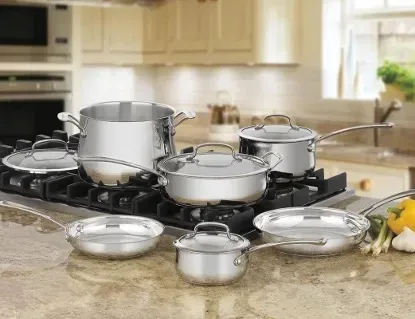
Un bon ustensile de cuisine est l'âme sœur de la cuisine, et un bon entretien est la plus longue confession de cette amitié.
Les ustensiles de cuisine en titane sont progressivement devenus les nouveaux favoris des cuisines modernes en raison de leurs caractéristiques saines, non toxiques, légères, durables et même de leur conductivité thermique. Cependant, de nombreuses personnes, après l'avoir acheté, souffrent d'une expérience d'utilisation considérablement réduite en raison d'un manque de compréhension des caractéristiques de l'ustensile.
Aujourd'hui, Hengguang, un principal fabricant d'ustensiles de cuisine en titaneLe directeur général de l'Agence européenne pour l'environnement (AEE), M. K. K., discutera des méthodes d'entretien des pots en titane, afin de garantir que votre investissement soit rentable.
Assaisonner votre nouvel ustensile de cuisine : La base de l'excellence à long terme
L'assaisonnement est la première étape critique de l'entretien des ustensiles de cuisine en titane. Au-delà de la simple élimination des résidus de fabrication et des impuretés, ce processus établit un film d'huile protecteur sur la surface, jetant les bases d'une performance physique antiadhésive supérieure. Suivez ces étapes pour un démarrage professionnel :
Nettoyage et dégraissage en profondeur : Lavez soigneusement l'intérieur et l'extérieur de la casserole à l'eau tiède, à l'aide d'une brosse à dents. savon à vaisselle douxet une éponge douce. Cela permet d'éliminer tous les agents protecteurs appliqués en usine et les impuretés de la surface. Essuyez complètement l'ustensile de cuisine avec un chiffon propre immédiatement après le rinçage.
Préchauffage et oxydation à sec : Placer la marmite sur chaleur faible à moyenne. Faites tourner l'ustensile de cuisson pour assurer une répartition uniforme de la chaleur jusqu'à ce qu'un léger filet de fumée apparaisse (environ 1 à 2 minutes). Cette étape essentielle permet de stériliser la surface et de faciliter la formation d'une pâte stable. film d'oxyde de titanequi renforce la durabilité naturelle du métal.
Conditionnement et infusion d'huile : Éteindre le feu et laisser refroidir la marmite jusqu'à ce qu'elle puisse être manipulée sans danger. Verser une petite quantité d'huile de cuisson ou de saindoux (le saindoux est fortement recommandé pour créer une couche plus résistante et durable). À l'aide d'une serviette en papier, étalez l'huile uniformément sur la surface intérieure, le fond et le bord, en veillant à ce que chaque centimètre soit assaisonné d'une couche de graisse fine et homogène.
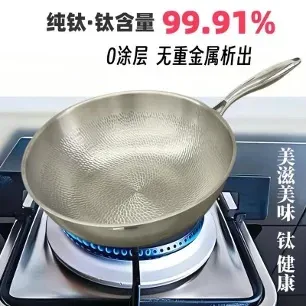
Formation d'un film statique : Réchauffez à feu doux pendant 1 à 2 minutes pour permettre à l'huile de pénétrer complètement dans les micropores de la couche de titane. Éteignez le feu et laissez refroidir naturellement. Versez l'excédent d'huile, rincez à l'eau claire et essuyez. Le processus d'ébullition est terminé
- Conseils : Au cours de la première semaine d'utilisation, essayez de frire autant de fois que possible (ailes de poulet frites, bâtonnets de pâte frits) pour aider à stabiliser le film d'huile. Parallèlement, évitez d'utiliser des méthodes de cuisson telles que la vapeur, l'ébullition et la cuisson à l'étouffée, car cela permet à la marmite de former une graisse protectrice et d'utiliser pleinement son effet physique antiadhésif.
Nettoyage quotidien : Un traitement en douceur est essentiel
Le nettoyage des ustensiles de cuisine en titane n'est pas nécessairement meilleur avec plus de force ; "doux et efficace" est le principe de base. Une méthode de nettoyage correcte peut protéger la couche d'oxyde à la surface des ustensiles de cuisine en titane et prolonger leur durée de vie.
Les étapes du nettoyage quotidien
- Après la cuisson, ne vous empressez pas de rincer la casserole chaude à l'eau froide. Attendez plutôt que l'ustensile refroidisse naturellement jusqu'à ce qu'il ne soit plus chaud au toucher, afin d'éviter des écarts de température trop importants qui pourraient entraîner une déformation du corps de la casserole.
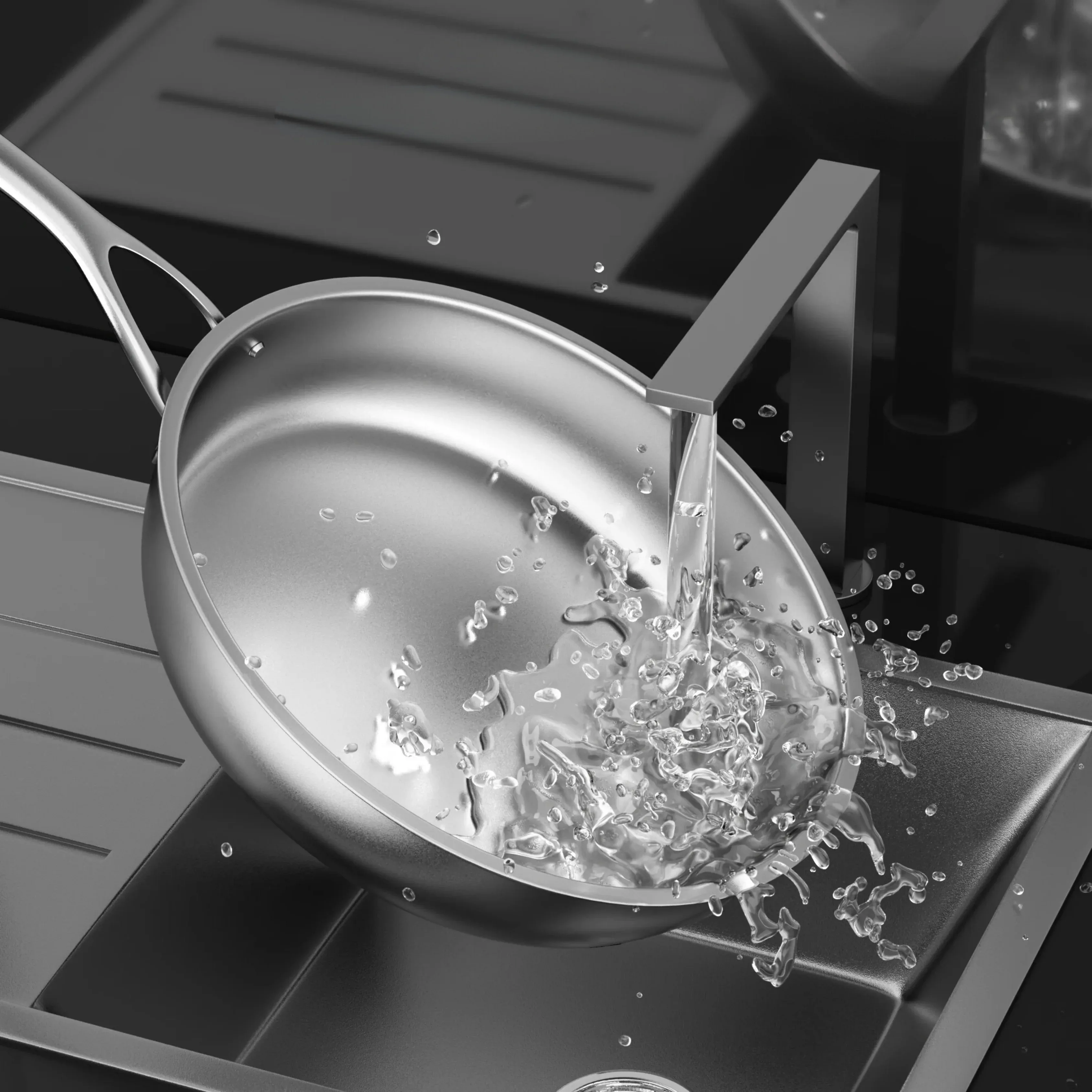
- Pour les taches d'huile ordinaires, rincez à l'eau tiède et essuyez avec un chiffon doux ou une éponge pour les éliminer facilement.
- Utilisez des produits de nettoyage neutres et évitez les acides forts (tels que l'acide chlorhydrique, le nettoyant pour toilettes) et les bases fortes (telles que l'hydroxyde de sodium) afin d'éviter la corrosion du film d'oxyde de titane.
Après le nettoyage, séchez soigneusement l'intérieur et l'extérieur de l'ustensile de cuisson à l'aide d'un chiffon sec, en veillant tout particulièrement à essuyer les interstices au fond de l'ustensile afin d'éviter que les autres couches métalliques du fond en composite ne soient affectées par l'humidité et l'oxydation.
Traitement des taches tenaces :
Ne pas gratter les résidus alimentaires brûlés ou jaunis avec des objets durs.
Vous pouvez essayer les méthodes suivantes :
- Faites tremper la tache dans de l'eau chaude pendant 10 à 15 minutes pour la ramollir naturellement, puis essuyez-la.
- Pour les taches plus tenaces, vous pouvez ajouter une petite quantité de vinaigre blanc ou de bicarbonate de soude dans la casserole, faire bouillir à feu doux pendant 2 à 3 minutes et utiliser une légère réaction acide-base pour décomposer les taches.
- Vous pouvez également essayer de les faire tremper dans du cola ou du vinaigre blanc pendant 1 à 2 heures avant de les nettoyer.
Une autre méthode consiste à remplir la casserole d'eau et à la faire bouillir pour éliminer les aliments collés à l'ustensile de cuisine en titane.
Détails de l'entretien pendant l'utilisation
Il est plus important d'éviter les dommages. Des habitudes d'utilisation correctes sont plus importantes que toute réparation ultérieure. Voici quelques éléments clés à prendre en compte :
- Gestion précise de la chaleur : Les ustensiles de cuisine en titane permettent une conduction rapide et uniforme de la chaleur, sans qu'il soit nécessaire d'utiliser un feu intense. Une chaleur faible à moyenne peut produire l'effet d'une chaleur élevée dans les ustensiles de cuisine traditionnels pour la cuisine quotidienne. Un feu important non seulement gaspille de l'énergie, mais peut également provoquer des températures locales trop élevées, endommageant la structure de l'ustensile de cuisine.
- Compatibilité des ustensiles et protection de la surface : Les pelles, cuillères et autres ustensiles en métal sont interdits pour éviter de rayer le corps du pot et d'en altérer l'aspect. Il est conseillé d'utiliser une pelle en bois, en silicone ou en nylon.
De même, lors du nettoyage, évitez d'utiliser des outils de nettoyage durs tels que des billes d'acier et des brosses dures. Il est recommandé d'utiliser des chiffons doux, des éponges ou des tampons à récurer spécialisés.
- Prévention de l'échauffement à sec : Évitez de prolonger le chauffage à sec des ustensiles de cuisine afin d'éviter les incendies et la déformation du corps de l'ustensile. Même si l'ustensile de cuisine en titane est résistant à la chaleur, le brûlage à sec d'un récipient vide peut entraîner une décoloration du corps du récipient et affecter l'uniformité de la conductivité thermique.
Précautions :
- La quantité d'aliments ne doit pas dépasser 80% de la capacité de la casserole pour garantir l'efficacité de la cuisson et la sécurité de la casserole.
- Évitez de conserver des aliments fortement acides et alcalins dans l'ustensile de cuisine pendant une longue période afin de prévenir la corrosion de l'ustensile.
- Le sel doit être ajouté après que la température de l'eau a augmenté et remué pour le dissoudre, afin d'éviter de l'ajouter à de l'eau froide et de provoquer de la corrosion au fond de la casserole.
Entretien régulier : Améliorer les ustensiles de cuisine en titane en les utilisant davantage
L'entretien des casseroles en titane n'est pas une solution ponctuelle ; un entretien régulier permet d'améliorer continuellement leurs performances antiadhésives.
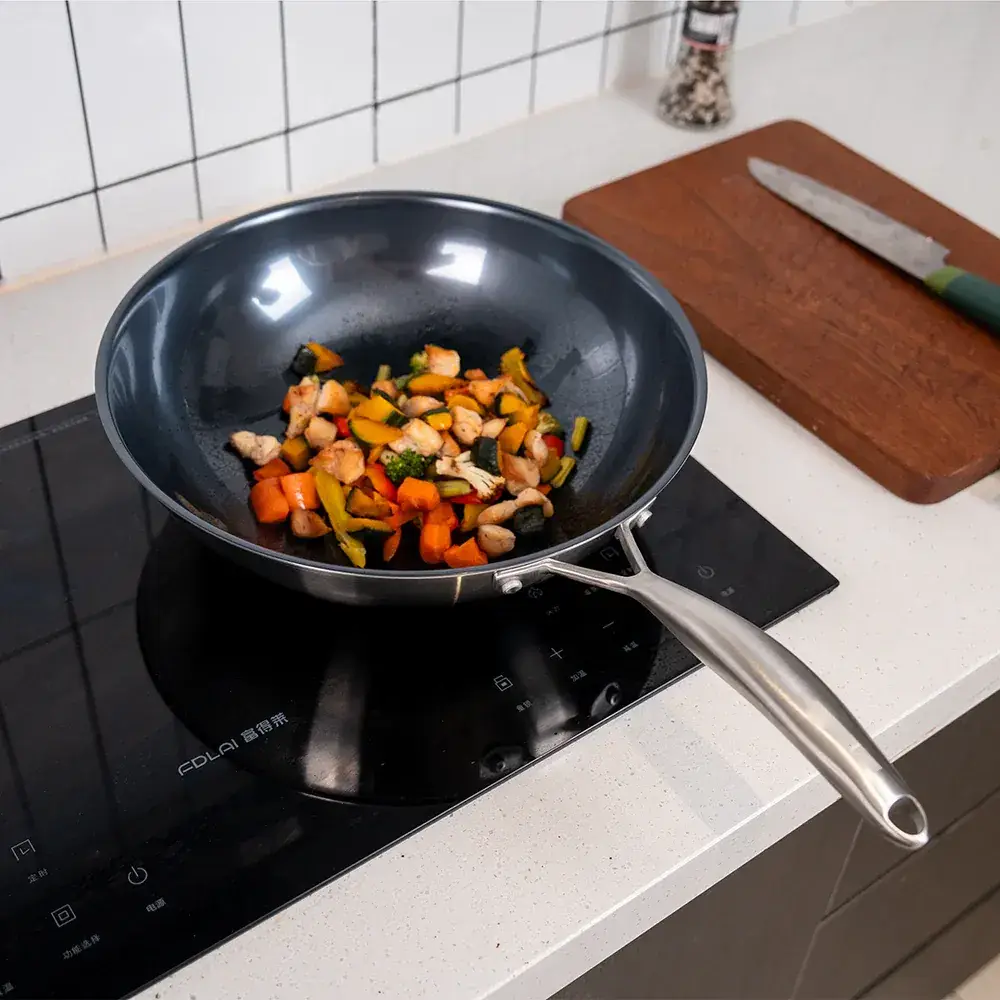
Entretien hebdomadaire des pots : Après avoir séché l'ustensile, appliquez une fine couche d'huile de cuisson à l'intérieur et laissez-le refroidir. L'huile se lie étroitement au film d'oxyde de titane, formant une couche protectrice antiadhésive naturelle. En conservant cette habitude, l'effet antiadhésif des ustensiles de cuisine en titane s'améliorera de plus en plus.
Réparation de petites rayures : Les rayures causées par la friction entre la pelle métallique et le corps du pot lors de l'utilisation quotidienne sont un phénomène normal et n'affectent pas l'utilisation du pot. Si une réparation est nécessaire, la couleur du pot peut être restaurée par la méthode du brûlage à sec.
Un stockage adéquat : La dernière étape pour prolonger la durée de vie de votre batterie de cuisine en titane
Des méthodes de stockage appropriées permettent d'éviter une usure inutile :
- Éviter l'empilement : Bien que les surfaces en titane soient résistantes à l'abrasion, l'empilage direct peut provoquer des rayures de friction entre les unités. Si l'empilage est nécessaire, placez un chiffon doux ou une serviette en papier entre les pots pour servir de tampon protecteur.
- Conserver dans un endroit sec et ventilé : Veillez à ce que l'environnement de stockage soit exempt d'humidité afin d'éviter l'apparition d'humidité ou de condensation.
- Entretien pour le stockage à long terme : En cas d'inutilisation prolongée, veillez à ce que l'ustensile de cuisine soit complètement sec. Appliquez une couche d'huile fine et régulière et couvrez avec le couvercle pour éviter l'accumulation de poussière et préserver le film d'huile conditionné (patine).
Réflexions finales
Au fond, l'entretien des ustensiles de cuisine en titane est plus qu'une corvée - c'est un choix de vie ancré dans un soin attentif. Il n'exige pas de procédures complexes ou fastidieuses ; il demande simplement une touche d'attention et de patience dans votre routine quotidienne. L'assaisonnement est la base, le nettoyage en douceur est la pratique quotidienne, la prévention des dommages est la clé essentielle, et le conditionnement régulier est l'élévation ultime de ses performances. Comme l'a si bien dit un expert culinaire : "Utilisez avec douceur, entretenez avec attention. Lorsque les ustensiles de cuisine sont imprégnés de la chaleur d'une vie bien vécue, ils se transforment en un héritage qui préserve les souvenirs de chaque repas et renforce les liens affectifs d'un foyer".
En suivant ces principes d'entretien simples, votre ustensile de cuisine en titane ne conservera pas seulement des performances optimales pour les années à venir, mais remplira également la promesse de devenir un véritable héritage pour trois générations. Après tout, un ustensile de cuisine qui vous accompagne au fil des décennies transporte bien plus que la saveur des aliments - il transporte l'essence même et les souvenirs de la maison.