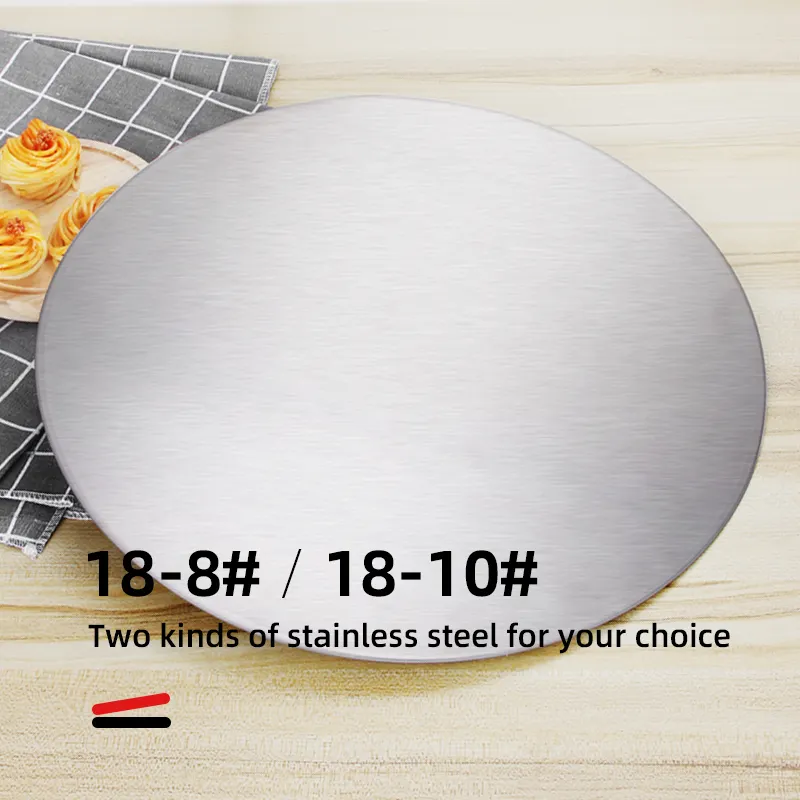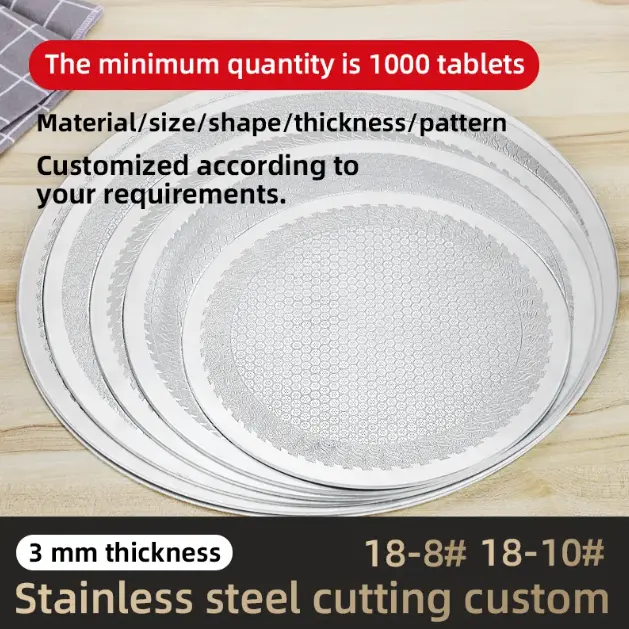

When evaluating suppliers for induction-ready cookware, tri-ply disc thickness is a procurement decision — not a technicality. Thickness determines heat distribution, flatness retention, induction response, and cost. For B2B buyers (brands, distributors, and commercial chefs), matching the right disc thickness to product type and market position reduces returns, limits complaints, and protects margins. This guide steers you from specs to sourcing decisions.
Why The Thickness Matters From A Tri-Ply Discs Supplier
Tri-ply disc thickness affects four buyer-relevant outcomes:
- Thermal performance — thicker discs store more heat and smooth out hot spots.
- Flatness & deformation resistance — thin discs can warp under high power or repeated cycles.
- Induction behavior — the magnetic outer layer (typically 430) needs enough mass to couple well with high-output induction hobs.
- Cost & logistics — thicker discs weigh more: higher material cost, higher freight and handling cost.
In short, thickness is the lever you pull to balance product quality, positioning, and landed cost.

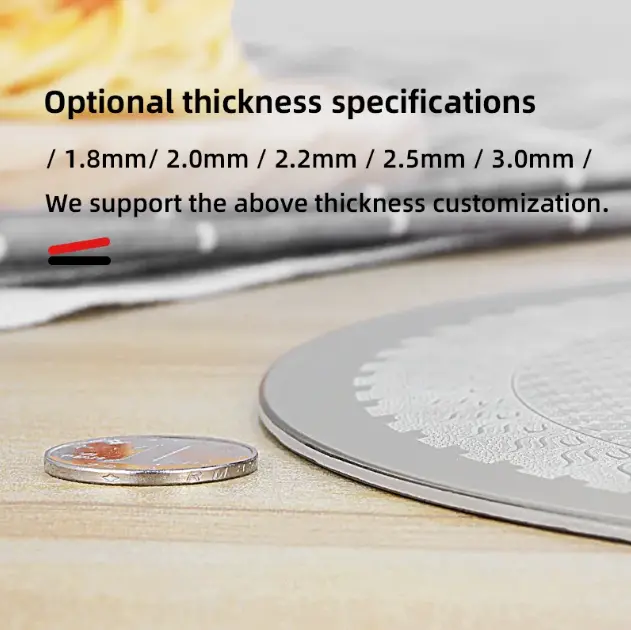
Quick Tri-Ply Disc Thickness Map: 1.8 → 3.0 mm, and Where Each Fits
To help tri-ply disc buyers understand the appropriate application of the corresponding thickness, below is a practical buyer’s cheat-sheet for tri-ply disc thickness options and the SKUs/markets they serve.
1.8 mm — ultra-light, entry SKUs
- Use: promotional frying pans, travel milk pots, ultra-low-cost sets.
- Benefits: lowest material cost and weight; easy to ship.
- Tradeoffs: higher risk of deformation on high power; less even heating.
- Buyer fit: price-sensitive markets and loss-leader SKUs.
2.0 mm — basic entry with induction compatibility
- Use: 16–24cm frying pans, small saucepans, milk pots.
- Benefits: acceptable induction response, slightly better stability than 1.8mm.
- Tradeoffs: still marginal for frequent, heavy use.
- Buyer fit: mass e-commerce entry lines, supermarket PL.
2.2 mm — light-mid market sweet spot
- Use: 24–28cm frying pans, mid-size woks, everyday cookware.
- Benefits: improved heat spread, lower complaint rate vs 2.0mm.
- Tradeoffs: modest weight increase; good ROI.
- Buyer fit: mainstream retail and brand mid-lane SKUs.
2.5 mm — mainstream bestseller thickness
- Use: flagship frying pans, honeycomb non-stick pans, family-size woks.
- Benefits: robust flatness, strong induction behavior, and reliability in daily use.
- Tradeoffs: higher unit weight but fewer product failures.
- Buyer fit: EU/AU retail, premium marketplace listings, subscription boxes.
3.0 mm — premium & commercial grade
- Use: large woks, stew/stock pots, hotel and restaurant cookware.
- Benefits: best thermal stability, minimal deformation under heavy use, supports pro-cooktops.
- Tradeoffs: the highest material and freight costs; suitable for higher ASP.
- Buyer fit: professional channels, premium SKUs, hospitality fleets.
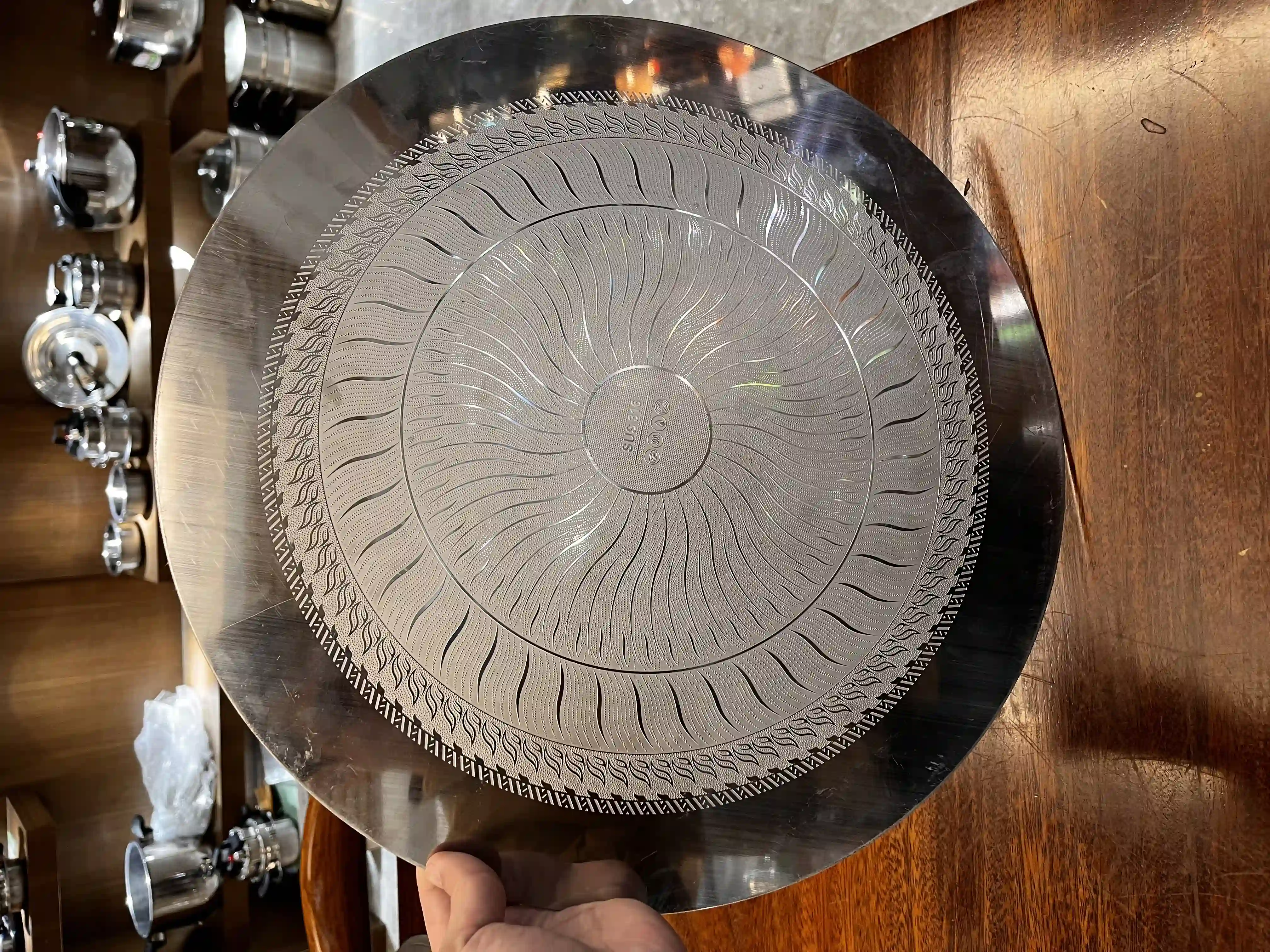
How to Evaluate a Factory on Tri-Ply Disc Thickness Control
Thickness spec is useless unless the factory can hold tolerances and reproduce at scale. Ask for:
- Thickness tolerance: can they guarantee ±0.05–0.1 mm per disc?
- Batch reports: per-coil or per-batch thickness measurement records.
- Flatness testing: thermal cycle and flatness (mm deviation) test reports.
- Bonding integrity: peel/shear tests for the clad bond between layers.
- Material traceability: 430, 304, and aluminum-core mill Certificates of Analysis (CoAs) linked to individual steel coil identification numbers.
Insist these items are part of the technical pack and pre-production approval.
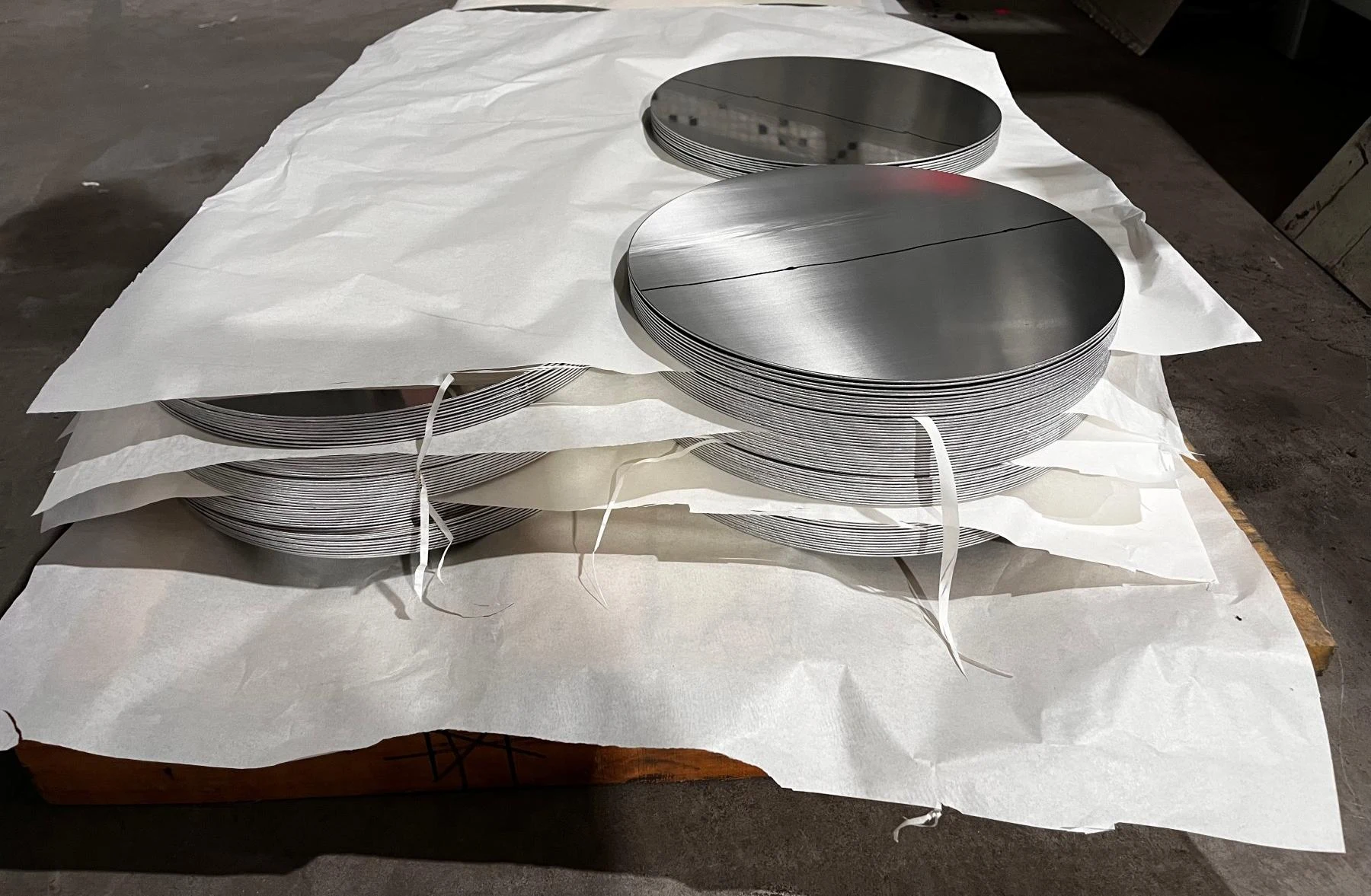
Matching Thickness to Your Market Strategy
Use a multi-SKU thickness strategy rather than a one-size approach:
- Entry & traffic drivers: keep a few 2.0mm SKUs to capture price buyers.
- Core profitable SKUs: standardize most SKUs at 2.2–2.5mm to minimize returns and complaints.
- Premium / pro lines: reserve 3.0mm for high-margin or B2B hospitality lines where reliability is mission-critical.
This mix lets you manage freight and inventory while positioning for margin uplift.
Hidden Cost Tradeoffs Buyers Must Quantify
Before choosing thicker discs, model these downstream costs:
- Freight cost per unit — weight increase affects FCL/LCL economics.
- Tariff & duty — heavier units sometimes trigger different HS band impacts.
- Handling & packaging — stronger cartons and palletization may be needed.
- Return & warranty reductions — thicker discs often save money by reducing failures.
A small upcharge per unit to move from 2.2mm to 2.5mm can be recovered many times over via lower returns and higher lifetime value.
Practical QC Checklist to Include in RFQs
Include these in your RFQ and PO to lock expectations:
- Target tri-ply discs thickness (specify tolerance).
- Flatness limit after 5 thermal cycles (e.g., ≤0.8 mm deviation).
- Bond strength (peel test in N/mm).
- Spectrometer certification for 430/304 composition.
- Sample pilot batch (nearly 300 pcs) with full testing before mass run.
Put acceptance criteria in the contract — samples only count when backed by BOM and test records.
Final Recommendation
- If you sell everyday retail cookware, prioritize 2.2–2.5mm.
- If you target premium, pro, or hospitality, use 3.0mm for core SKUs.
- Use 1.8–2.0mm only for clear, low-price, low-use scenarios.
Selecting the correct tri-ply disc thickness is one of the fastest levers to improve product reliability and brand reputation. Don’t buy on paper specs alone—require batch data, pilot runs, and guaranteed tolerances. If you want, we can draft a supplier-ready thickness spec and RFQ checklist tailored to your SKU mix and target markets.
About Hengguang – Your Reliable Tri-Ply Disc Supplier
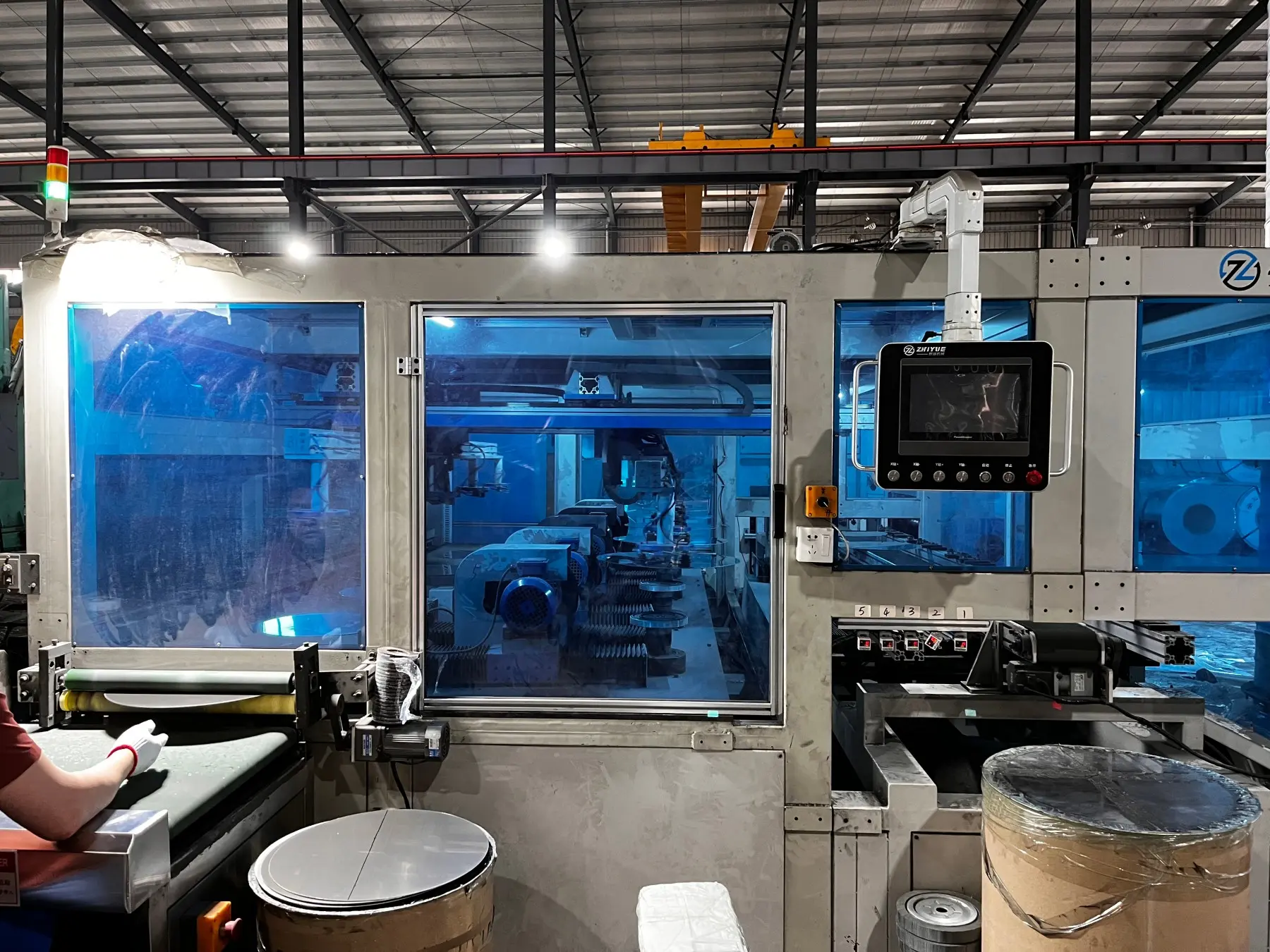
Hengguang is a leading stainless steel kitchenware manufacturer and broadens our business on manufacturing tri-ply stainless steel discs for induction-ready cookware, supplying brands, distributors, and cookware factories that require consistent performance at scale. With mature production lines and controlled thickness management, Hengguang supports long-term B2B programs and custom kitchenware with a tri-ply structure solution where flatness stability, bonding strength, and batch repeatability directly impact return rates.
Our factory offers custom tri-ply disc thickness options from 1.8mm to 3.0mm, along with diameter, material combination, and surface finishing customization to match different cookware positioning. Backed by stable raw material sourcing and standardized QC documentation, Hengguang delivers a reliable supply for both entry-volume SKUs and premium commercial-grade lines.
Discover Hengguang’s wholesale tri-ply stainless steel discs →