



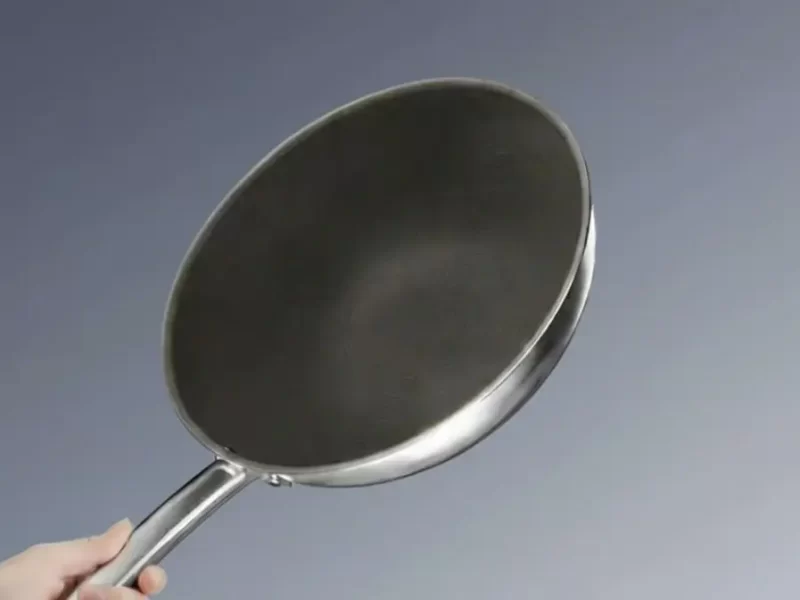
The morning sun streamed through the kitchen window, and I habitually reached for my trusty old iron pan to fry an egg. Before the oil was even hot, the food was already sticking firmly to the bottom of the pan—a scene I’m sure every cooking enthusiast has experienced. It wasn’t until I discovered titanium cookware that I truly understood what “pure cooking” meant.
In recent years, titanium cookware, with its unique advantages, has quietly entered thousands of kitchens. As an OEM and ODM titanium cookware supplier, Hengguang can tell that this material, hailed as a “space metal,” is bringing about a silent revolution in our kitchens.
Titanium Metal: A Technological Leap from Space to the Kitchen
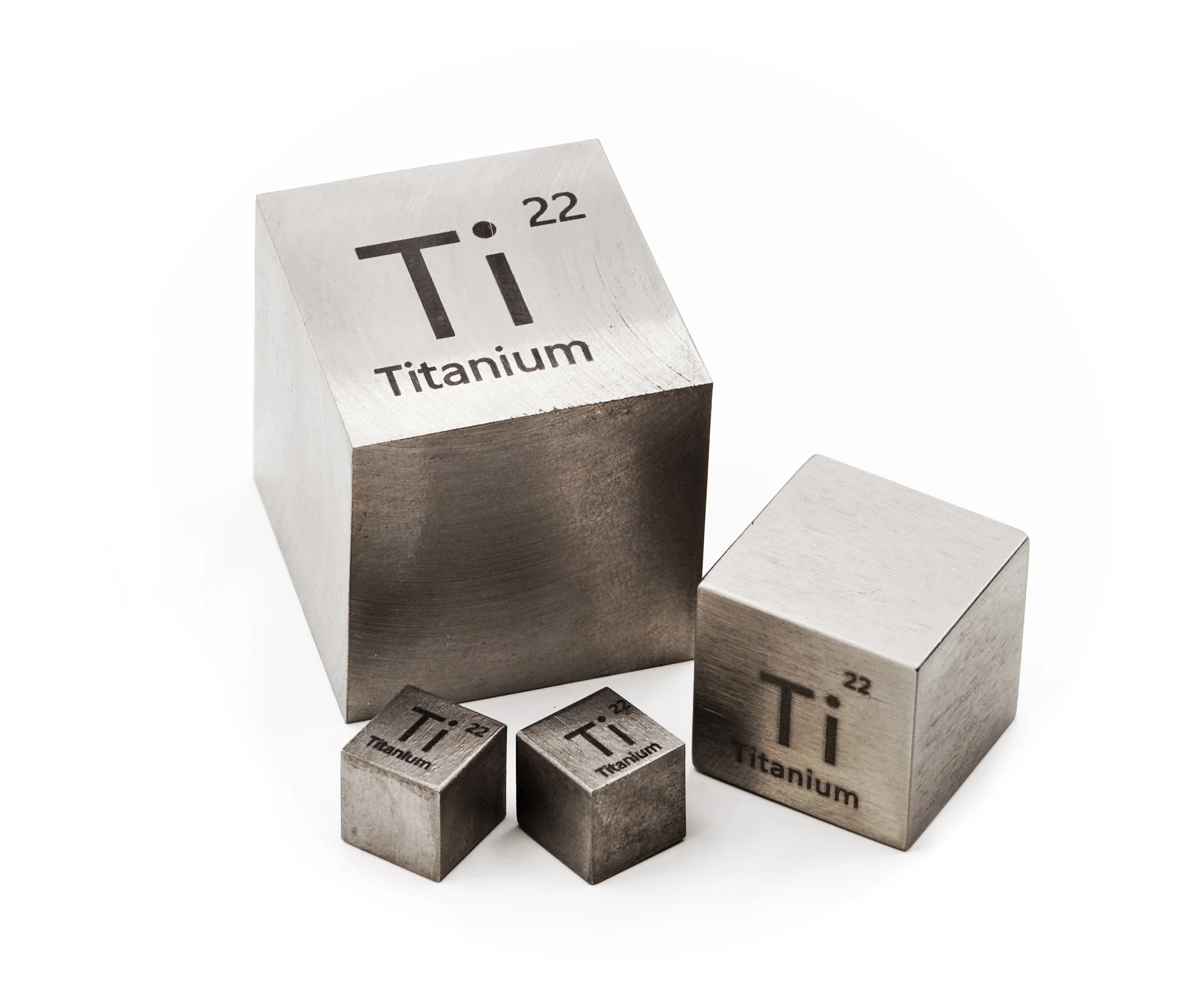
The applications of titanium in aerospace and medical fields are no secret: artificial joints, heart stents, and other implants all utilize titanium, demonstrating its excellent biocompatibility and safety. When this “biometal” is transformed into cookware, it brings not only a change in material but also an upgrade in cooking philosophy.
Titanium boasts three core advantages: high strength, strong corrosion resistance, and low density. Titanium’s density is only 50% of iron’s, making it lighter for the same volume, which makes tossing and stirring in the kitchen effortless. Even more remarkably, titanium has extreme resistance to acids and alkalis, and does not react even with prolonged contact with oil, salt, soy sauce, and vinegar. One experiment placed a titanium plate in seawater for 30 years, and subsequent testing revealed almost no corrosion.
Compared to traditional cookware, titanium cookware brings revolutionary changes: zero coating yet non-stick properties, utilizing the inherent oleophobic properties of titanium metal for natural non-stick performance; superior antibacterial properties, with a 99% inhibition rate against common bacteria such as E. coli; and exceptional durability, with corrosion resistance more than 10 times that of 304 stainless steel.
Titanium Cookware in Practical Scenarios: From Everyday Cooking to New Year’s Eve Dinner
In practical use, the titanium cookware performed surprisingly well. I remember the first time I used it, I specifically tested it with fried eggs, which are notorious for sticking to the pan. The moment the egg whites slid freely in the pan, my years of experience scraping the bottom of pans suddenly became completely unnecessary.
The titanium cookware boasts approximately 30% higher heat conductivity than traditional cookware, ensuring even heating and eliminating the problem of localized overheating that causes excessive smoke. The 32cm large capacity design performed exceptionally well during our Chinese New Year’s Eve dinner; after cooking eight substantial dishes, the pan remained as clean as new. Even more remarkably, the inert nature of titanium metal prevents it from reacting with acidic ingredients, so there’s no more “metallic taste” when cooking acidic foods like tomatoes or lemons. This is a significant advantage for modern cooking philosophies that prioritize the original flavor of ingredients.
The design details also reflect thoughtful consideration for user convenience. For example, some titanium cookware uses an integrated molding process for the handles and body, avoiding the hygienic dead ends created by rivets; the standable glass lid design makes cooking even more convenient.
Limitations and Challenges of Titanium Cookware
Actually, indeed, titanium cookware is not without its flaws.
- Poor heat conductivity is its main drawback. Titanium has a lower thermal conductivity than metals like aluminum and copper, making it prone to localized overheating when directly heated. It requires cooking over low to medium heat.
- The high price is also a significant factor. The mining and processing costs of titanium metal are high, and the price of finished cookware is usually 3-5 times that of ordinary stainless steel cookware. A high-quality titanium wok often costs over a thousand yuan.
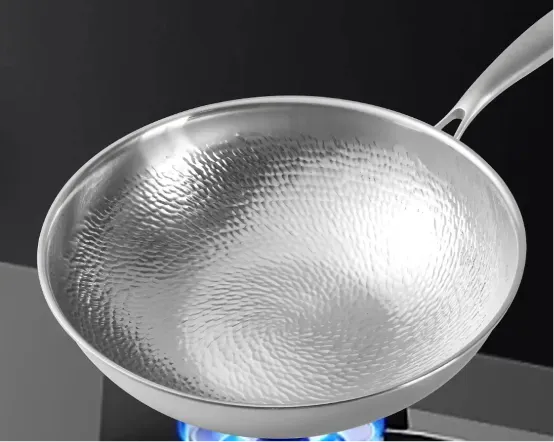
- Using titanium cookware requires more skill. Due to uneven heat distribution, frequent adjustment of the heat is necessary when frying or stir-frying, and beginners may encounter problems with food sticking or burning. Although some brands improve non-stick properties through surface embossing (such as hammered or scale patterns), the effect is still not as good as Teflon coatings.
- After prolonged use at high temperatures, the surface of titanium cookware may develop rainbow-like patterns or yellowing. This is a normal oxidation phenomenon; while it doesn’t affect usability, it may affect the appearance.
Market Guide to Choosing Mainstream Titanium Cookware
Faced with the dazzling array of titanium cookware products on the market, consumers often feel confused.
In reality, titanium cookware is mainly divided into three categories:
- Pure titanium woks are made from a single piece of titanium plate with a titanium content of over 90%, typically 2-4mm thick. Their advantage is health and safety, but their disadvantage is poor heat conductivity, less than 1/5 of iron, and they are not suitable for induction cooktops.
- Composite titanium woks have a thin layer of titanium (approximately 0.4-0.5mm) on the inner layer, an aluminum middle layer, and an outer layer of stainless steel or iron. This multi-layered composite structure solves the problem of slow heat conduction in pure titanium woks, making them suitable for induction cooktops and resistant to metal spatulas.
- Titanium alloy woks are the most mixed bag, including both genuine titanium alloy woks and those that are simply coated with a titanium element. Consumers need to carefully distinguish between them to avoid paying for a titanium wok and getting an ordinary coated wok.
Well-known brands such as Supor’s uncoated lightweight titanium wok use 100% pure titanium material, and its Bessel curve design enhances the smoothness of stir-frying; JD.com’s Jingzao Titanium Scale Pattern Wok Pro achieves physical non-stick properties through its scale pattern design and has extremely high wear resistance.
Guide to Using and Maintaining Titanium Cookware
Proper use and maintenance can extend the lifespan of your titanium cookware and enhance your cooking experience:
- Seasoning and Conditioning: For first-time use, evenly wipe the new pan with cooking oil and heat it to form a protective film and reduce sticking. Before first use, you can also wipe the inner surface with ginger slices to further enhance the non-stick effect.
- Heat Control: Avoid dry heating. Medium to low heat cooking provides more even results; preheat the pan before frying and maintain a stable oil temperature. Keep the flame from exceeding the bottom of the pan to prevent gas impurities from blackening the cookware.
- Cleaning: Clean with a soft cloth and neutral detergent; do not use steel wool or strong acid cleaners. After cleaning, rinse with clean water; avoid using a dishcloth for secondary contamination.
- Storage: Keep in a dry and well-ventilated place. When stacking, use a soft cloth to prevent scratching. Before long-term storage, ensure the cookware is thoroughly cleaned and dried.
Are Titanium Cookware Sets a Waste of Money or a Wise Investment for Family Health?
The debate about whether titanium cookware is a “scam” or a worthwhile investment has been ongoing. Determining whether titanium cookware is worth the investment requires considering individual needs:
- Titanium cookware is particularly suitable for the following groups: families with high demands for health and safety (such as those preparing baby food), outdoor camping enthusiasts, and people with metal allergies.
- However, for those who prioritize quick stir-frying, cost-effectiveness, or are accustomed to using coated cookware, traditional cookware may be more suitable.
In the long run, titanium cookware can last for 3-5 years, or even longer. Although the initial investment cost is higher, considering its extremely long lifespan and almost “zero maintenance” characteristics, it is undoubtedly a highly cost-effective long-term investment.
With advancements in materials science and improvements in manufacturing processes, titanium cookware will see significant improvements in cost-effectiveness and ease of use. Coating technology can enhance surface hardness, and 3D printing technology makes customized titanium cookware possible.
Conclusion
Titanium cookware is more than just a cooking utensil; it represents modern people’s pursuit of a healthy lifestyle. With improvements in manufacturing processes and reduced costs, titanium cookware is gradually moving from the high-end market into the mainstream consumer market.
In the future, we have reason to believe that titanium cookware will continue to drive the upgrading and innovation of the entire cookware industry, allowing more people to enjoy the pleasure of cooking brought by technology. Whether you are a novice cook or a seasoned chef, a well-designed titanium wok can add a lot of enjoyment to your cooking experience. It might just be the “ultimate wok” you’ve been looking for, accompanying you from kitchen beginner to culinary expert.
About Hengguang Titanium Kitchen Cookware Manufacturer

Hengguang is a professional titanium cookware manufacturer specializing in safe, durable, and uncoated cooking solutions. Leveraging aerospace-grade titanium materials and advanced forming processes, we supply wholesale titanium cookware for retail and professional kitchens worldwide. Hengguang supports brands with flexible MOQs, stable quality control, and end-to-end custom titanium cookware solution capabilities.