



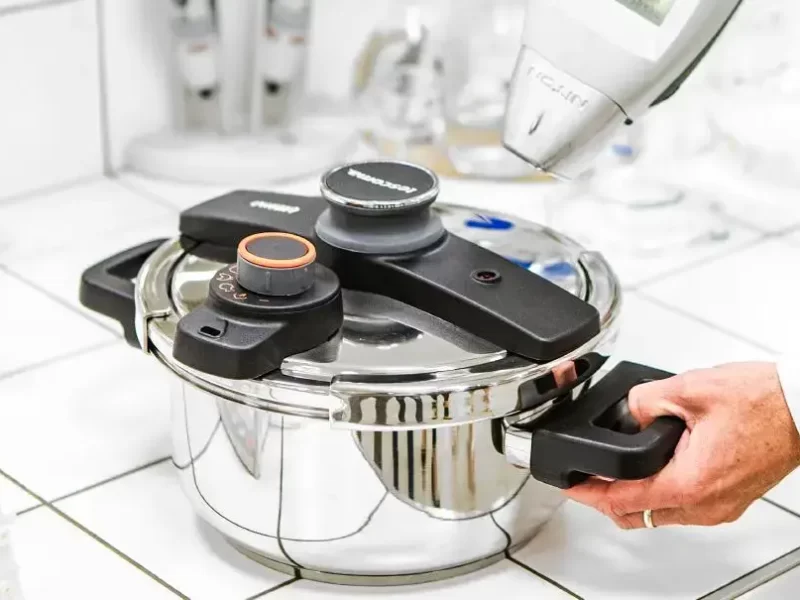
Mini pressure cookers are compact, but their quality risks are not. For wholesale buyers, common mini pressure cooker defects involving the gasket, pressure-control system, lid, material, or configuration can affect safety, function, compliance, or the consistency of an entire batch.
The key is to distinguish a manufacturing defect from a setup issue, then determine whether the problem is cosmetic, functional, or safety-critical.
What Counts as a Quality Problem in a Wholesale Mini Pressure Cooker?
A quality problem is any condition in which the supplied product does not reliably match its approved specification, required function, or applicable safety requirements.
For pressure cookers, the most important areas are:
- Sealing: the lid and gasket must form the intended pressure boundary.
- Pressure control: pressure-control and safety devices must operate as designed.
- Safe opening: the lid should not be capable of unsafe opening while pressure remains.
- Structure: the body, lid, rim, bottom, handles, and other components must retain their required function.
- Configuration: capacity, materials, components, markings, and accessories must match the approved model.
Technical pressure-cooker standards and test frameworks address these areas through requirements and tests for pressure control, safety devices, opening systems, deformation, materials, coatings, handles, and workmanship. Exact requirements depend on the applicable market and product.
7 Common Quality Problems in Wholesale Mini Pressure Cookers
Sealing and Gasket Leakage
Pressure cooker leakage is one of the easiest problems to notice, but not every leak has the same cause.
Common symptoms include:
- Steam escaping around the lid.
- Pressure failing to build or hold.
- A gasket that is distorted, dirty, incorrectly positioned, or poorly fitted.
- Damage or dimensional variation around the sealing surface.
A pressure cooker gasket is only one part of the sealing system. Manufacturer troubleshooting guidance identifies lid closure, gasket position and condition, heat source, liquid level, pressure controls, and blocked indicators as possible reasons a cooker may fail to build pressure.
For wholesale inspection, do not immediately classify every leak as a defective gasket. Check the gasket, lid, rim, assembly condition, and model-specific operating requirements together.
Pressure-Control and Safety-Valve Problems
A pressure cooker safety valve or pressure-control component is safety-critical. Potential problems include:
- Pressure not reaching the intended working range.
- Unstable pressure.
- A pressure-control component that does not respond correctly.
- A safety device that is incorrectly fitted, obstructed, or unreliable.
- Components that differ from the approved configuration.
BIS’s IS 2347 testing framework includes operating tests for pressure-regulating devices, safety relief devices, bursting pressure, removal of the lid under pressure, and handle testing.
Hengguang states that its published testing capabilities include pressure, leak, material durability, and valve reliability testing. For more detail, see its pressure cooker quality testing capabilities. These are company-published capability descriptions; they do not establish a test result for every model or batch.
Lid Alignment and Locking Mechanism Defects
A pressure cooker lid locking mechanism can create a serious safety problem if it does not engage, remain secure, or prevent unsafe opening as designed.
Watch for:
- Difficulty closing or locking the lid.
- Inconsistent alignment between the lid and body.
- Excessive play in the locking components.
- An indicator or locking mechanism that behaves inconsistently.
- A lid that can be opened before pressure has been safely reduced.
This is not merely theoretical. In a 2023 CPSC recall, certain pressure cookers were recalled because the lid could unlock and be removed during use, allowing hot contents to escape.
The lesson for wholesale buyers is simple: smooth operation on an empty sample is not enough evidence of safe locking under pressure.
Body, Lid, Rim, and Bottom Deformation
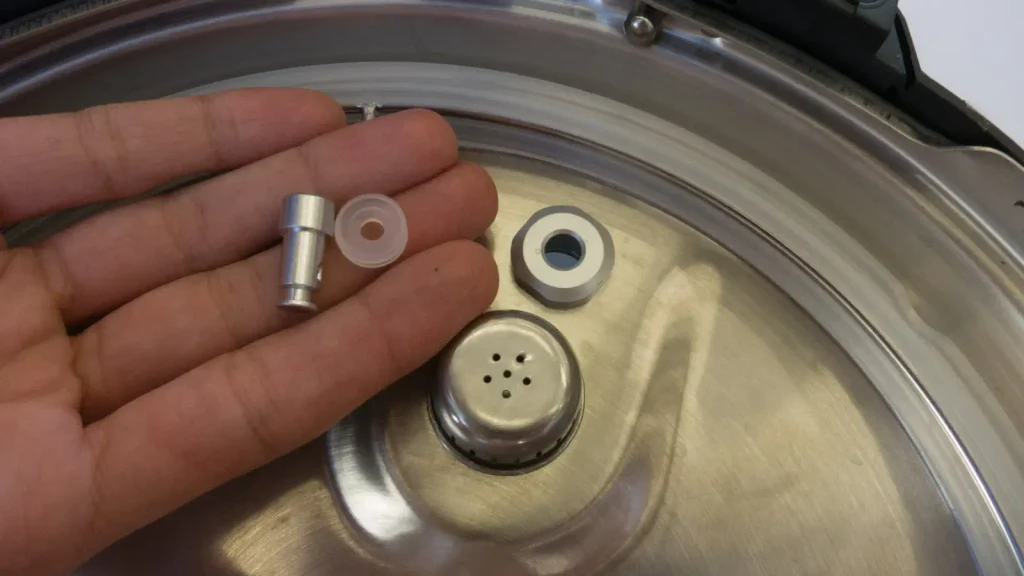
Deformation can appear as:
- A warped rim.
- A distorted lid.
- An uneven body.
- A bottom that does not retain the required shape.
- Dimensional variation between units.
The problem is not necessarily cosmetic. A distorted rim can affect sealing; a distorted lid can affect closing or locking; bottom deformation can affect stability or cooktop contact.
Pressure-cooker technical frameworks address deformation of the body and lid and include requirements concerning the bottom and safe opening system.
For pressure cooker inspection, compare the product against the approved drawing, specification, sample, and applicable requirements rather than relying on visual judgment alone.
Material, Thickness, and Surface Inconsistency
Wholesale buyers may encounter:
- The wrong material grade.
- Inconsistent pressure cooker material thickness.
- Material substitutions between production batches.
- Coating defects where a coated model is specified.
- Blisters, cracks, sharp edges, or other surface defects.
A visual check cannot establish material grade by itself. Component-level specifications should identify the material, thickness, construction, and relevant finish for the body, lid, base, and other parts.
The applicable standard or purchase specification should determine the acceptance criteria. Do not invent a universal “safe thickness” for all mini pressure cookers.
Handle, Knob, and Accessory Assembly Problems
A loose handle or knob may look minor, but its significance depends on how the component is used and how it is attached.
Potential problems include:
- Loose or misaligned handles.
- Cracks or sharp edges.
- Incorrect fasteners.
- Components that do not match the approved model.
- Accessories supplied in the wrong version.
Testing frameworks for pressure cookers include handle-related requirements because safe handling is part of product performance, not merely appearance.
The correct response is to assess the component against the model specification and intended function rather than automatically classifying every assembly variation as a major defect.
Capacity, Marking, and Configuration Mismatch
A batch can also fail because the product configuration is wrong even when the physical cooker looks acceptable.
Examples include:
- Actual capacity not matching the approved specification.
- Incorrect capacity markings.
- The wrong lid, gasket, valve, or accessory fitted to the model.
- Incorrect heat-source or operating markings.
- Packaging or instructions that do not match the supplied configuration.
This can become a safety issue. In a CPSC recall, incorrect volume markings on pressure-cooker inner pots could encourage overfilling and contribute to hot contents being expelled under pressure.
Configuration accuracy should therefore be treated as part of quality control, not as a paperwork issue.
How to Tell a Manufacturing Defect from a Setup or Use Problem
A symptom is not automatically proof of a manufacturing defect.
For example, a pressure cooker that does not build pressure may have a genuine component problem. But it may also have an incorrectly positioned gasket, an improperly closed lid, insufficient heat, an incorrectly positioned pressure regulator, or another operating issue. Manufacturer guidance lists these possibilities explicitly.
A practical diagnostic sequence is:
- Rule out setup: Confirm that the product was assembled and operated according to its instructions.
- Compare with the approved specification: Check the model, components, dimensions, materials, and configuration.
- Inspect the relevant component: Examine the gasket, lid, rim, valve, locking mechanism, or other suspected part.
- Perform the appropriate functional test: Use the test method required for the product and market.
- Classify the finding: Decide whether it is a setup issue, cosmetic deviation, functional defect, or safety-critical defect.
This prevents two opposite mistakes: rejecting acceptable products because of an operating error, or dismissing a real manufacturing defect as “normal use.”
How Wholesale Buyers Should Verify Quality Before Accepting a Bulk Order
For a wholesale mini pressure cooker, quality verification should move beyond a visual sample check.
Approve a clear reference sample
The approved sample should define the intended product configuration: capacity, materials, dimensions, lid, gasket, valves, handles, finish, accessories, markings, and packaging where relevant.
Verify components and specifications
Check the actual batch against the agreed specification. Material and component evidence should match the supplied model rather than a different product or generic factory document.
Verify safety and functional performance
The inspection plan should cover the pressure control, sealing, locking, and safety functions relevant to the model. Hengguang’s published capability page describes incoming and outgoing inspection and pressure-cooker testing covering pressure, leakage, material durability, and valve reliability.
Check batch consistency
The most important wholesale distinction is this:
A passed sample proves the sample. It does not automatically prove the batch.
Bulk inspection should therefore look for material substitutions, dimensional drift, assembly variation, configuration errors, and repeated functional failures.
If you need to assess a supplier’s manufacturing and testing process after identifying the relevant defects, see these questions to ask a mini pressure cooker supplier for the next evaluation step.
How to Classify Defects by Business Risk
Not every deviation deserves the same response.
| Defect class | Typical examples | Typical buyer response |
|---|---|---|
| Safety-critical | Unsafe opening, serious pressure-control failure, safety-device failure | Hold or reject affected units and investigate before release |
| Functional | Leakage, unreliable locking, major deformation, incorrect pressure behavior | Require corrective action and reinspection |
| Cosmetic | Surface variation that does not affect function or agreed appearance | Evaluate against the approved specification and acceptance criteria |
This is an editorial risk classification, not a substitute for the applicable inspection standard, legal requirement, or contractual acceptance criteria.
The correct question is not “Does this unit look perfect?” It is:
Does this defect affect safety, function, specification compliance, or batch consistency?
FAQs
What are the most serious quality problems in a mini pressure cooker?
Problems involving unsafe opening, pressure control, safety devices, serious sealing failure, or structural deformation can be safety-critical. Their acceptance should be based on the applicable product requirements and functional testing, not visual inspection alone.
How can buyers identify pressure cooker leakage during inspection?
Check whether the symptom remains after confirming correct assembly and operation. Then inspect the gasket, lid, rim, pressure-control components, and other relevant parts before deciding whether the cause is a product defect.
Does passing a sample mean the entire wholesale batch is safe?
No. A sample establishes a reference point. Bulk orders still require appropriate material, assembly, functional, and consistency checks.
What quality records should a pressure cooker manufacturer provide?
The appropriate records depend on the product, market, and agreed inspection plan. Buyers should expect evidence that is traceable to the supplied model and relevant materials or components, rather than relying on a generic certificate or report.
Conclusion
The most useful way to evaluate mini pressure cooker quality problems is to connect the visible symptom to the underlying component and then to the appropriate verification method.
For wholesale orders, focus on four questions:
- Does the product match the approved specification?
- Does each safety-critical function work as intended?
- Is the problem isolated or repeated across the batch?
- Is the evidence relevant to the exact model, material, and market?
That approach is more reliable than judging quality from appearance or from a single successful sample.
For buyers ready to compare models and configurations, you can review Hengguang’s wholesale mini pressure cooker range before defining the final product specification.