



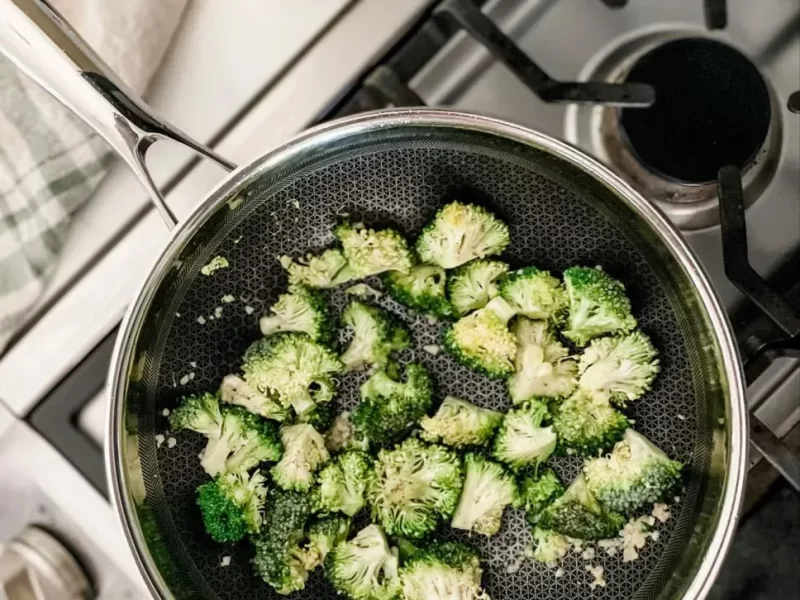
Modern consumers demand cookware that balances performance, safety, and longevity. For B2B buyers—retail buyers, private-label brands, and OEM partners—honeycomb stainless steel cookware (textured stainless with recessed “honeycomb” cells protecting a thin nonstick layer or serving as a stand-alone surface) represents a high-value SKU: it addresses sticky cooking complaints, extends in-service life compared with coated pans, and supports premium positioning without the liabilities of traditional PTFE nonstick.
Hengguang, a leading stainless steel kitchenware manufacturer, will explain why this format matters commercially, what to specify, and how to validate suppliers.
Market Rationale: Why Brands Should Add Honeycomb SKUs
- Consumer pain points: sticky pans, rapid nonstick wear, visible scratches, and early replacement. Honeycomb designs reduce direct utensil contact with coating, extending perceived life and lowering warranty claims.
- Premium differentiation without full cladding cost: compared with fully clad, thick multi-ply cookware, honeycomb surfaces allow premium positioning (durable, semi-nonstick) at a lower BOM uplift.
- Higher acceptance in conservative markets: health-conscious buyers resist chemical coatings; honeycomb finishes that use minimal or reinforced coatings (or none) reduce market resistance and increase cross-channel acceptance.
- Retail advantages: longer product life → better reviews → lower return & replacement costs; supports higher ASPs for mid-to-premium segments.
What “Honeycomb” Means in Production Terms
Honeycomb stainless steel cookware uses a patterned top layer—Raised Ridges and Recessed Pockets—formed by Chemical Etching or Laser Engraving on the stainless surface. Two main implementations are common:
- Honeycomb + reinforced coating: A thin nonstick coating is deposited inside the cells while the raised stainless ridges deliver scratch resistance and reduce direct abrasion.
- Honeycomb stainless only: No coating; the textured stainless plus oil forms a semi-release surface. This appeals in markets wary of coatings.
Honeycomb is frequently applied to pans with tri-ply or clad bases, combining the honeycomb functional surface with a conductive core for uniform heating.

Technical Rationale: Why Honeycomb Stainless Steel Cookware SKU is a Strategic Asset
Superior Abrasion Resistance
The etched, raised stainless steel ridges act as a “physical armor” for the non-stick surface. This structural design effectively shields the recessed coating from direct contact with metal spatulas and the mechanical wear of abrasive scouring pads. In procurement evaluations, this durability ensures compliance with high-tier LGA or TUV abrasion resistance standards, positioning the product in the premium performance category.
Extended Product Lifecycle & Enhanced CLV
The primary driver for returns in traditional non-stick cookware is coating degradation. By significantly mitigating surface wear, honeycomb technology directly reduces return rates and warranty claims. For brand owners, this minimizes reverse logistics costs while fostering higher Customer Lifetime Value (CLV) and strengthening brand equity through long-term reliability.
Optimized Thermal Stability
Typically integrated with a tri-ply cladded base (Stainless/Aluminum/Stainless), the honeycomb surface complements a high-conductivity core. This synergy ensures rapid, edge-to-edge heat distribution. Furthermore, the recessed micro-cells facilitate subtle heat convection during cooking, effectively eliminating hotspots and reducing the risk of localized food scorching.
Versatile Culinary Usability
- Superior Oil Distribution: The laser-etched pockets trap and retain oil, preventing it from pooling at the edges. This ensures a consistent lubricating film across the entire cooking surface, even with minimal oil usage.
- High-Temperature Searing: Unlike conventional non-stick pans that degrade under high heat, honeycomb hybrids are engineered for high-heat applications. They support the Maillard reaction, allowing professional-grade searing and browning that traditional coatings cannot achieve.

Premium Aesthetics & Strategic Price Positioning
The distinct “hi-tech” visual appeal of the honeycomb texture provides immediate shelf differentiation. This premium metallic finish supports a higher Average Selling Price (ASP) and makes the product ideal for high-end gifting channels. It allows retailers to capture mid-to-high-tier market segments while maintaining healthy profit margins.
Requirement List for Honeycomb Stainless Steel Cookware RFQ
Surface Design: Specify etching method (Chemical Etching preferred), cell depth (0.15–0.3mm for standard, up to 0.8mm for deep texture), and stainless-to-coating coverage ratio.
Multi-ply Construction: Define the cladded structure (e.g., SUS 304 Interior / Al Core / SUS 430 Exterior). Specify total wall thickness (min. 2.5mm) and layer distribution.
Coating Specs: Define coating brand (e.g., Whitford, Greblon, or Ceramic), application thickness (µm), and mandatory compliance with LFGB/FDA migration limits.
Durability Testing: Request results for metal utensil resistance and salt spray tests (for corrosion resistance).
Handle & Rims: Specify handle material (cast SS vs. hollow), attachment method (double-riveted), and rim finishing (sealed edges to prevent Al-leaching).
Manufacturing and Supply Considerations
- Process control: embossing depth, cell uniformity, and Ra before coating are process-sensitive; specify SPC monitoring points.
- Tooling and repeatability: emboss dies wear; require agreement on die life and replacement policies.
- Production volume strategy: honeycomb tooling and coating runs favor larger batches; negotiate MOQ and price breaks.
- Customization: color PVD exteriors, laser logos, and SKU tiering (coated vs uncoated variants) are common commercial strategies.
- Sourcing timeline: prototype → sample validation (including real-use testing) → pilot run → mass production. Expect 4–8 weeks for tooling and samples, longer for novel coatings.
Commercial ROI and Positioning
For brands, honeycomb stainless steel cookware SKUs can command higher margins with materially lower post-sale service costs. Quantify ROI by modeling:
- premium price delta vs baseline;
- expected reduction in return rate (historical replacement rates for coated pans);
- extended warranty costs vs the current product cohort.
This business case usually justifies moderate BOM increases for mid-to-premium assortments.
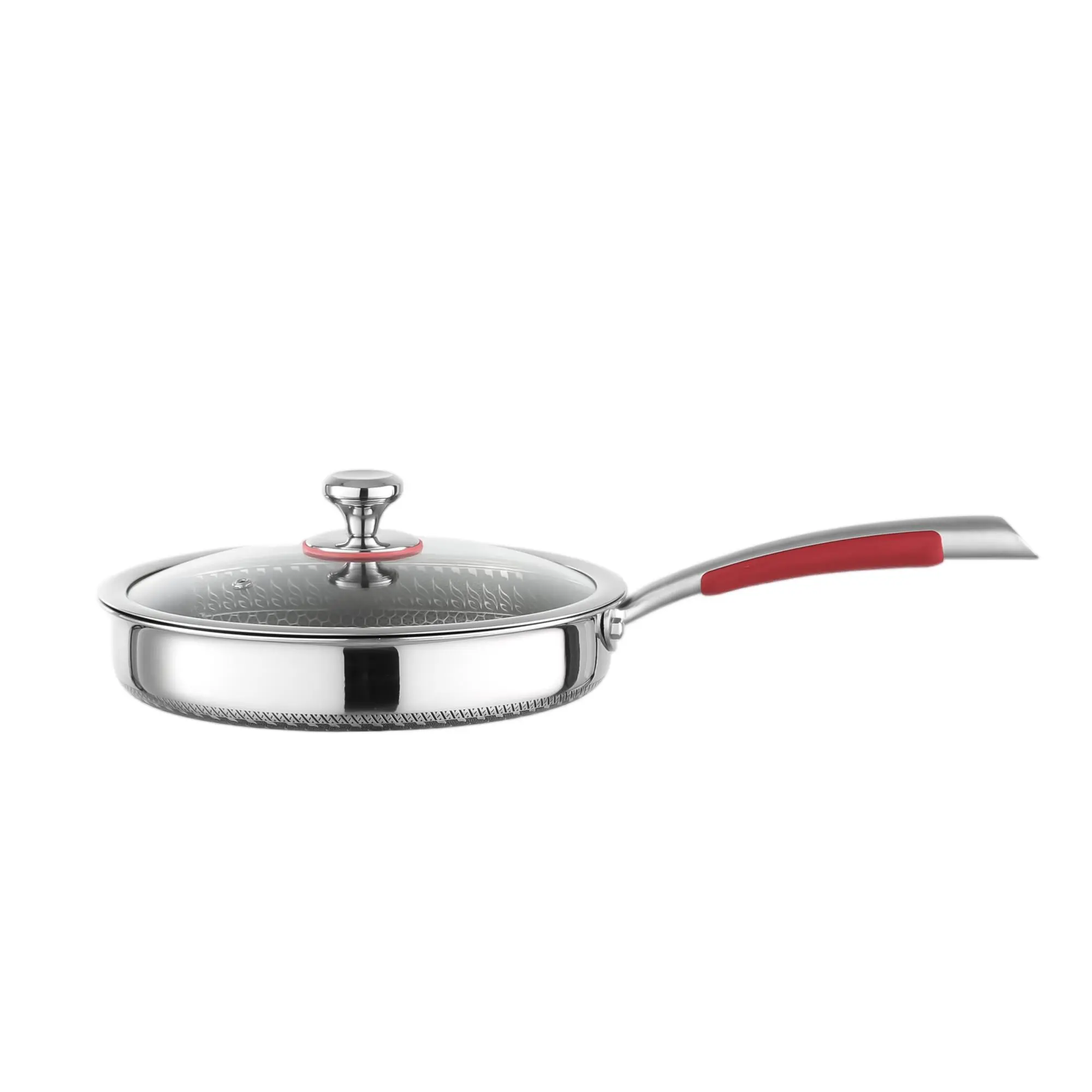
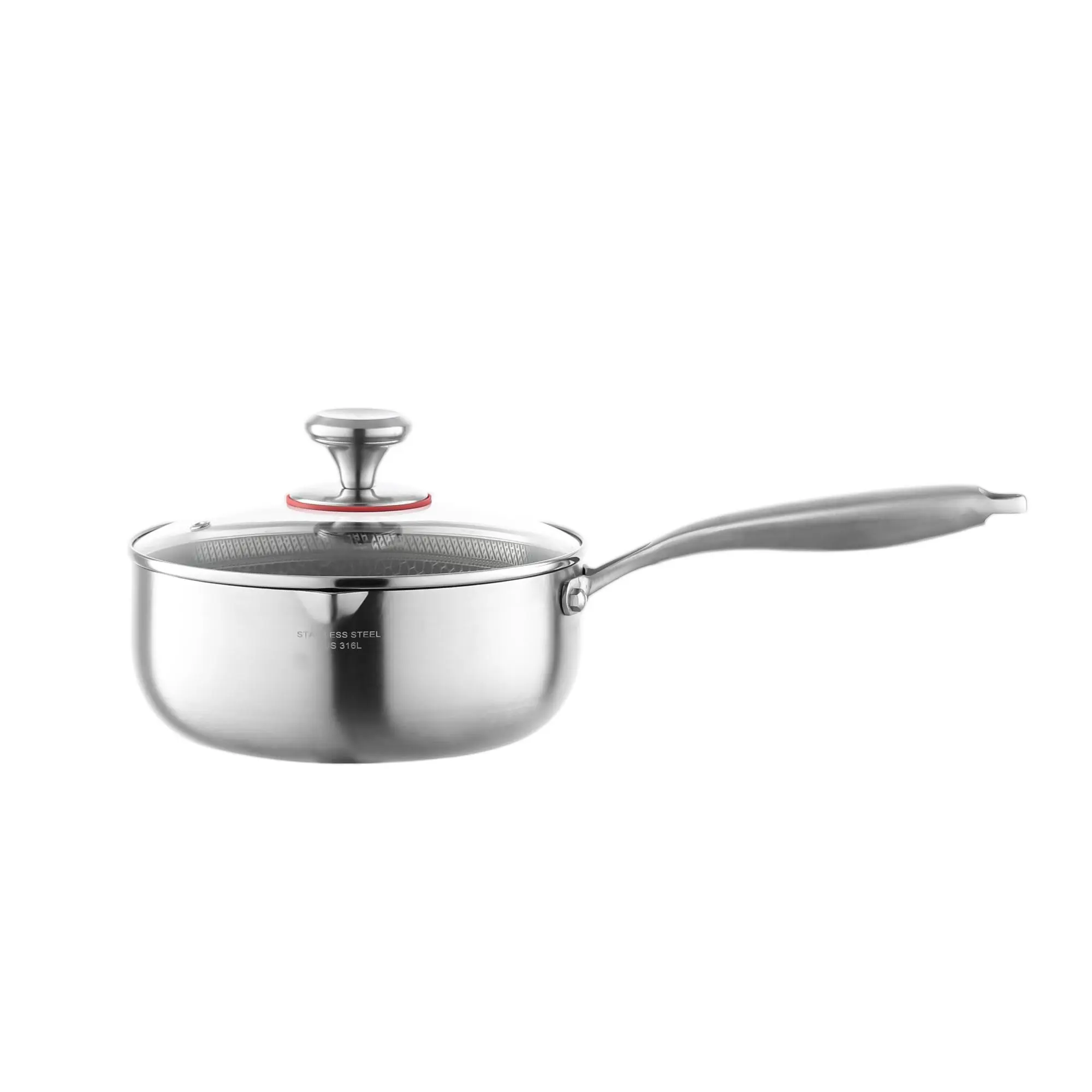
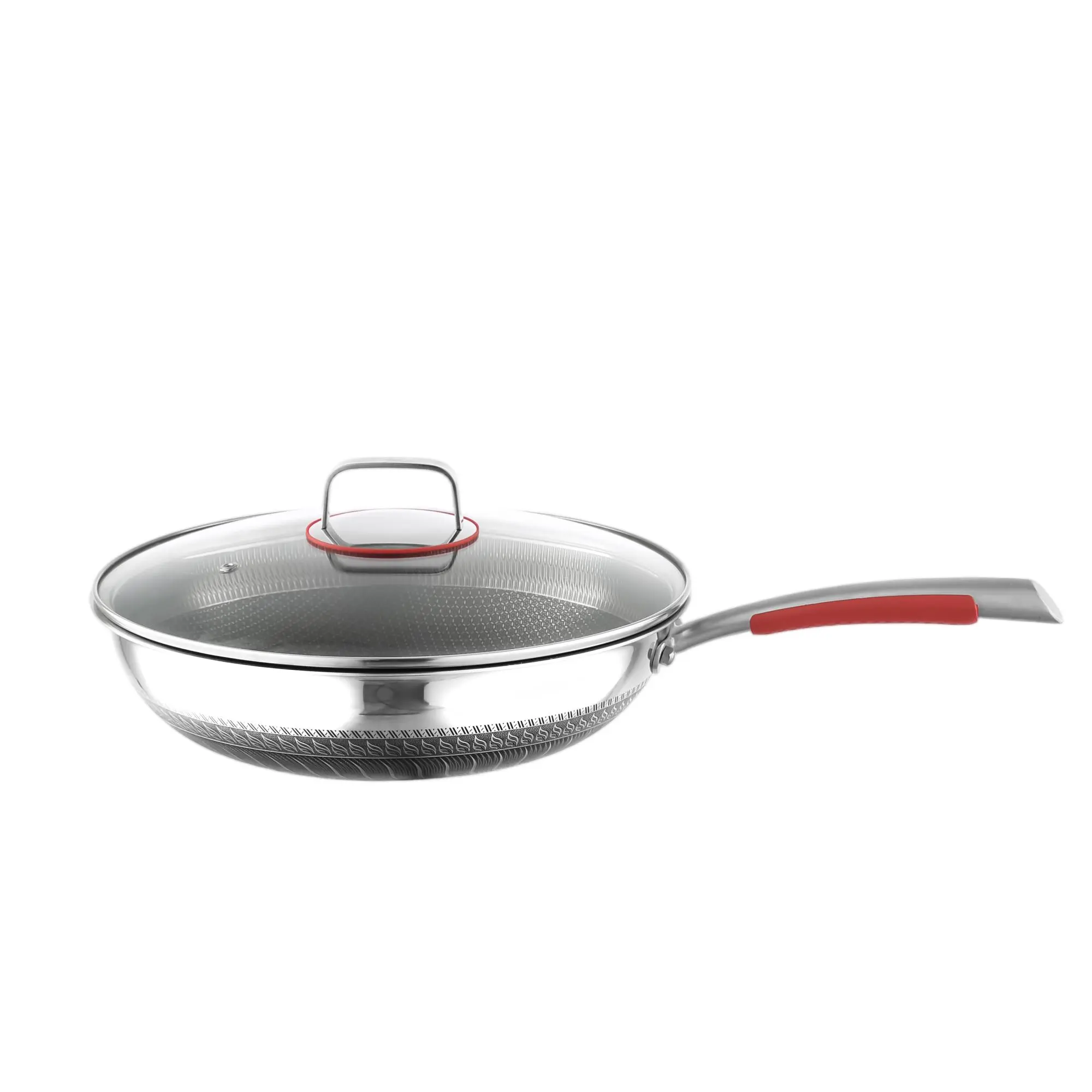
Hengguang’s Competitive Non-Stick Honeycomb Stainless Steel Cookware
Quick Procurement Checklist
When buying wholesale honeycomb stainless steel cookware, check the following:
- Honeycomb cell depth/pitch/coverage %
- Tri-ply base spec and total thickness
- Stainless grades (top & core) and CoA required
- Coating type, thickness, adhesion class (if used)
- Taber abrasion & thermal cycle acceptance thresholds
- Induction heating response test method
- Sample approval criteria and pilot order MOQ
- Packaging, labeling, and required certificates (FDA/LFGB if targeted)
Conclusion
Honeycomb stainless steel cookware is a strong strategic SKU for B2B teams seeking a product that combines performance, durability, and retail appeal. For procurement and OEM managers, success depends on specifying measurable surface and base parameters, enforcing rigorous QA tests, and aligning tooling/volume strategies with supply partners. When executed with clear RFQs and supplier controls, honeycomb cookware reduces returns, improves user reviews, and supports premium positioning without the full cost of multi-ply bodies.
About Hengguang

As one of the top stainless steel kitchenware manufacturers, Hengguang is committed to providing reliable and high-quality stainless steel kitchenware. Our businesses range from wholesale stainless steel kitchenware, wholesale non-stick honeycomb stainless steel cookware, and custom honeycomb stainless steel cookware solutions.
Cooperated with Hengguang, you will get:
🍳Premium tri-ply cookware materials
⚡High-speed automatic production line
✅Test-proof products
✈️Global fast delivery